A quarterly gain obscures a half-year decline and a decade-old poverty baseline is about to collide with the national budget debate.
By Raimundos Oki
Founder & Editor, The Oekusi Post. Lifau, Oe-Cusse Ambeno, Timor-Leste. September 18, 2026
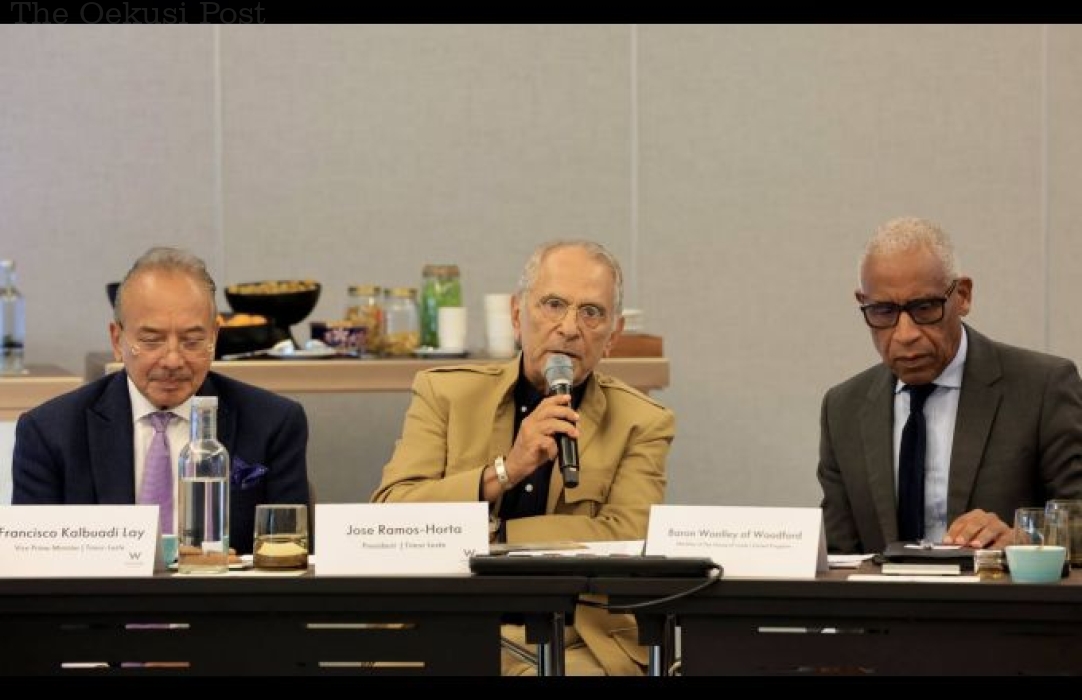
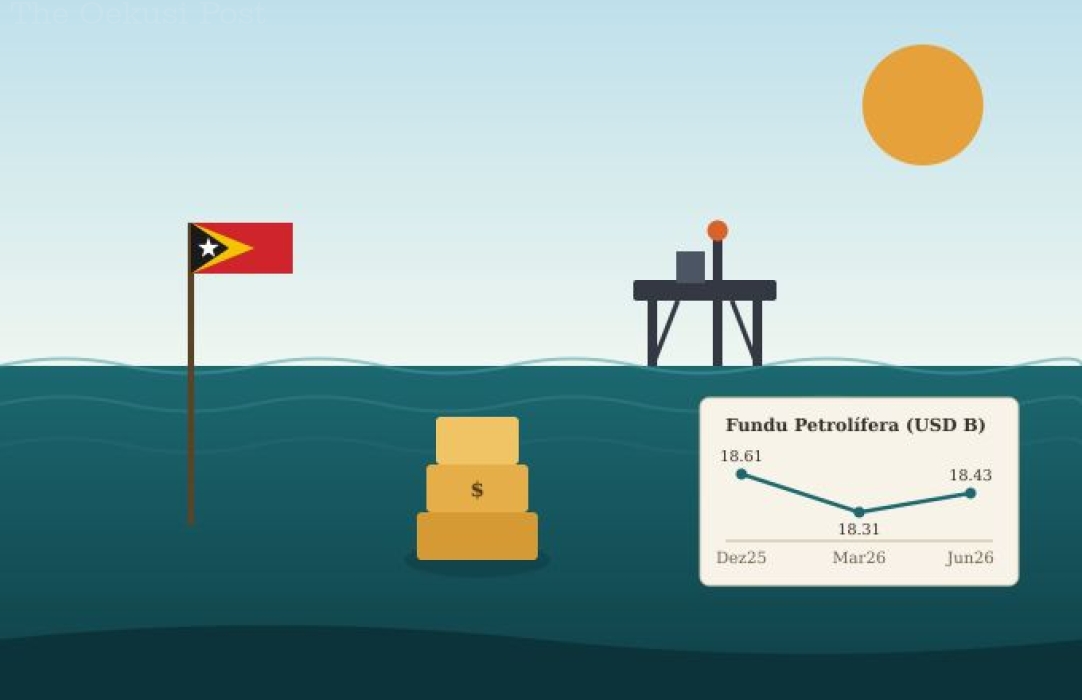
DILI (TOP) - When Prime Minister Kay Rala Xanana Gusmão briefed President of the Republic of Timor-Leste José Ramos-Horta at the Presidential Palace in Bairro-Pité on Thursday, the message he carried sounded reassuring: the Petroleum Fund had grown. From $18.31 billion at the end of March to $18.43 billion at the end of June, the nation's sovereign wealth fund had added $120 million in a single quarter, buoyed by a stock market rally that delivered $719 million in gross investment income.
"I informed the President of the Republic that, yesterday at the Council of Ministers, the Governor of the Central Bank presented a report on Timor-Leste's economic development during the last six months and also on the management of the Petroleum Fund," Xanana told reporters after the weekly meeting.
It is a quarter-on-quarter story, and quarter-on-quarter, it is true. But step back to the full six-month window the Central Bank of Timor-Leste (BCTL) Governor Helder Lopes actually reported on, and a different picture emerges.
At the close of 2025, the fund stood at $18.61 billion. By the end of March 2026, it had fallen to $18.31 billion, a drop of roughly $300 million driven by negative investment returns of about $97.72 million against a backdrop of withdrawals to finance the state budget. The rebound through the second quarter recovered only part of that ground. Measured from December to June, the fund is down close to one percent, not up.
“The ‘increase’ the Council of Ministers highlighted is real only if the first quarter's losses are quietly left out of the frame.”
This is not a new pattern in how the fund's performance gets communicated in Dili. Officials tend to report the most recent positive interval, while the broader trend, positive or negative, gets folded into a half-year or full-year figure released with less fanfare. For a country whose national budget depends heavily on the fund, and where a large share of the public has no independent means of verifying central bank figures, the framing matters as much as the arithmetic.
Two forces are doing the real work beneath the headline. The first is the market: Timor-Leste's fund, like most sovereign wealth funds, is exposed to global equities, and a strong second quarter for stocks internationally lifted the numbers back up. The second is the state's own appetite for withdrawals. During the first half of 2026, the government pulled $800 million out of the fund to cover General State Budget expenditure a sum larger than the entire quarterly investment gain being celebrated.
The BCTL's own presentation flagged this directly, noting the decline in oil revenue and the fund's growing dependence on investment income, rather than petroleum receipts, to sustain itself going forward. In other words: the fund's long-term health now rests less on what is in the ground at Greater Sunrise or Bayu-Undan's remnants, and more on how global markets perform and how disciplined future governments choose to be with withdrawals.
That framing complicates the political optics. A fund celebrated as growing is easier to defend before parliament ahead of budget season than one acknowledged to be shrinking under the weight of state spending. And the timing is notable: this briefing arrives just as the Ministry of Finance has presented the Council of Ministers with its own poverty report one that, according to PM Xanana, diverges from World Bank figures. Reconciling the two, the Council has decided, needs to happen before the National Parliament opens its budget debate.
PM Xanana's explanation for the gap was pointed: the World Bank figures on the table are pinned to 2014. That dateline is not incidental. The World Bank's own most recent poverty and equity brief on Timor-Leste concedes the same limitation, noting that the country made significant strides in reducing poverty from 2007 to 2014, but that a lack of recent data makes it difficult to assess current progress.
Under the national poverty line, the rate fell from 50.4 percent in 2007 to 41.8 percent in 2014. Measured against the international extreme-poverty line of $2.15 a day, the improvement looked sharper still, dropping from 40.9 percent to 24.4 percent over the same period, with most of the gains concentrated among households dependent on agriculture. Inequality, measured by the Gini index, stayed comparatively low at 28.7 in 2014.
But those are eleven-year-old numbers being used to make policy arguments in 2026. Rural poverty in that 2014 snapshot ran more than double urban poverty 28.4 percent against 14.3 percent and access gaps were stark: nearly 40 percent of the poor lacked limited-standard sanitation and more than a quarter had no access to electricity. Whether those gaps have narrowed with a decade of ZEESM investment, infrastructure spending and petroleum-financed budgets, or simply shifted shape, is precisely the question a 2014 baseline cannot answer.
“A ministry citing fresher, lower poverty numbers has an obvious incentive heading into a parliamentary budget debate; a Bank still citing 2014 data is not necessarily wrong, only out of date.”
The World Bank itself appears to know this. Its brief notes that the government completed a new living standards survey in 2024 and is now updating its poverty estimation which suggests the Ministry of Finance's “different” report may not be a rival methodology so much as the first real update in a decade, arriving just ahead of a budget cycle where both figures will be politically useful to different arguments. A ministry citing fresher, lower poverty numbers has an obvious incentive heading into a parliamentary budget debate; a Bank still citing 2014 data is not necessarily wrong, only out of date. Sorting out which of those two things, recency or manipulation, actually explains the gap the Council of Ministers flagged is a question worth its own follow-up.
There was other business in the same session worth noting. Timor-Leste's Mutual Assessment under the Asia-Pacific Group on Money Laundering found the country fully or largely compliant with 22 of the Financial Action Task Force's 40 recommendations, with 12 more partially met. The gaps flagged, supervision, prevention, investigation, asset recovery, and the application of financial sanctions, are precisely the areas where enforcement against transnational financial crime tends to falter in small, resource-dependent states with thin regulatory capacity. The government has committed to a National Risk Assessment and a strengthened institutional framework in response, though such commitments have a long history of moving slower than the threats they are meant to address.
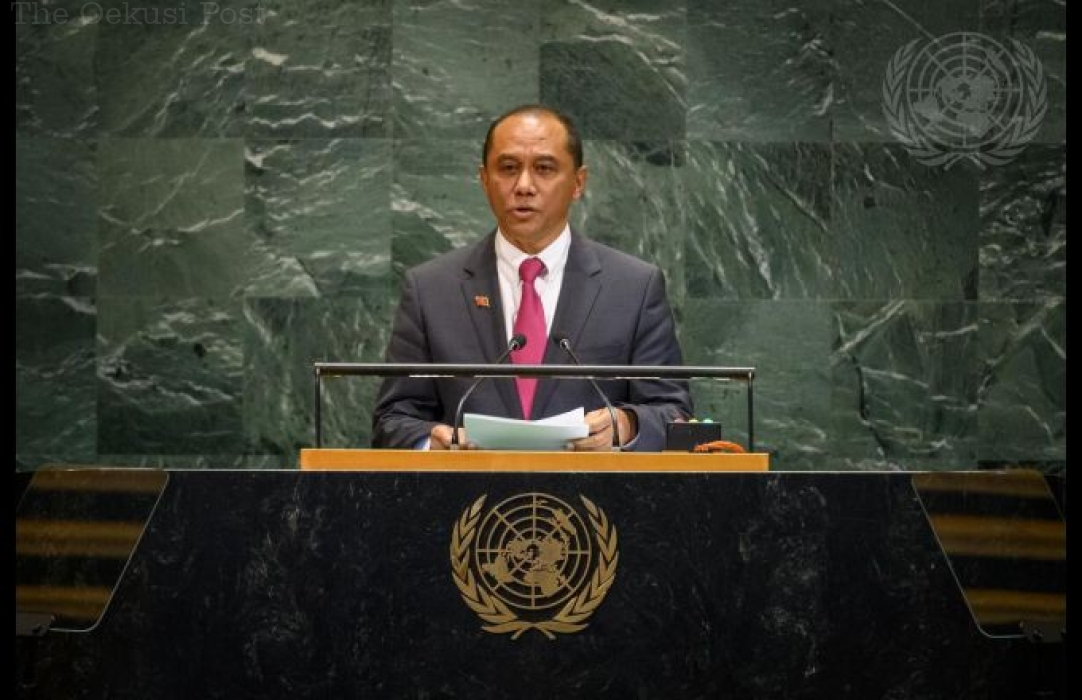
Meanwhile, the diplomatic calendar moves forward. President Ramos-Horta departs for New York on September 18 to address a high-level United Nations meeting, where he is expected to speak to Timor-Leste's place in the wider world. PM Xanana, for his part, has confirmed an October visit to Thailand that will include a seminar specifically on Petroleum Fund management, a sign that the fund's governance is becoming as much a subject of regional conversation as a domestic budget line.
“The gap between the number that gets announced and the number that actually holds up is not a technically. It is the story.”
For a small state whose entire fiscal architecture rests on a finite, market-exposed pool of money, and whose poverty picture still leans on a decade-old survey, the gap between the number that gets announced and the number that actually holds up is not a technicality. It is the story.
Raimundos Oki is founder and editor of The Oekusi Post, reporting on governance, press freedom and organized crime in Oe-Cusse Ambeno and across Timor-Leste.