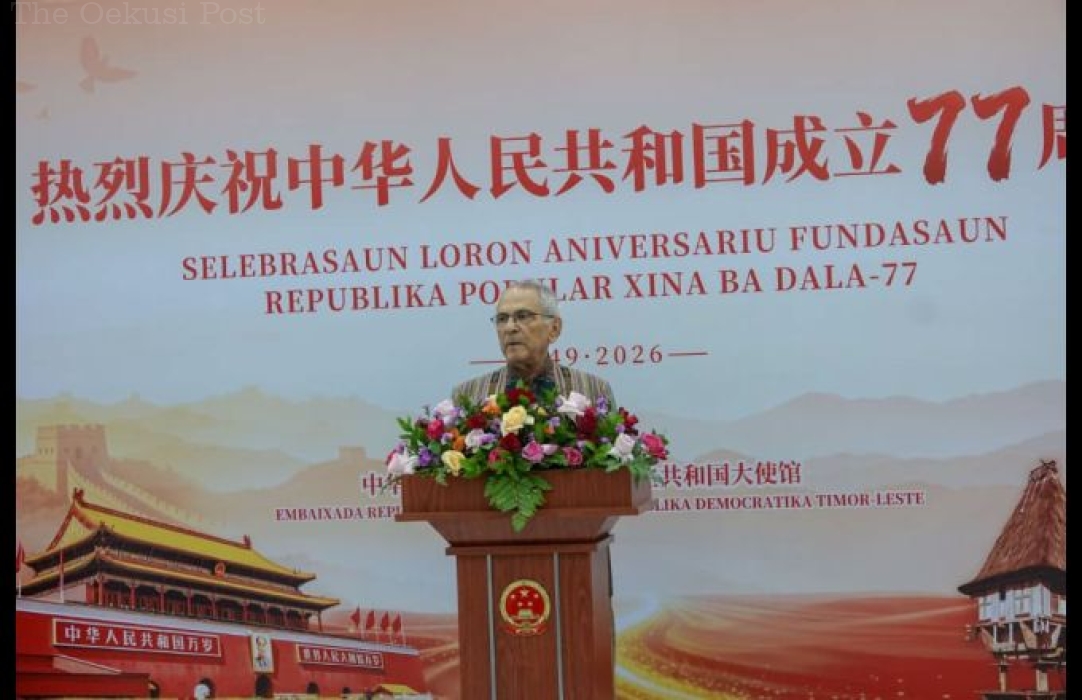
DILI (TOP) - President José Ramos-Horta used Timor-Leste's commemoration of the 77th anniversary of the founding of the People's Republic of China to reaffirm Dili's alignment with Beijing on core sovereignty issues, while framing the relationship as entering a new, more economically balanced phase.
Addressing Chinese Ambassador Wang Wenli and members of the diplomatic corps, the president opened with condolences for lives lost in recent flooding in the Tibet Autonomous Region, calling the tragedy a reminder of "shared vulnerability to climate change and the vital necessity of human solidarity."
Ramos-Horta grounded the bilateral relationship in centuries of contact, citing Chinese sandalwood traders who reached Timor as early as the 7th century and records of Chinese families settled in Dili by 1703 a diaspora he said "helped build the foundations of our local commerce, culture, and sports."
He singled out China's first ambassador to Timor-Leste, Shao Guanfu, who the president said lived in "a refurbished shipping container in Dili for a year" while setting up the mission, and UN peacekeeping officer Zhou Li, who guarded Timor-Leste's 2002 independence ceremonies.
"True friendship is measured by who stands beside you when the future is uncertain," Ramos-Horta said.
On Taiwan, the president's language was unambiguous. "We recognize that there is but one China, that the Government of the People's Republic of China is the sole lawful government representing the whole of China, and that Taiwan is an inalienable part of Chinese territory," he said restating a position Dili has held since establishing relations with Beijing in 2002, shortly after independence.
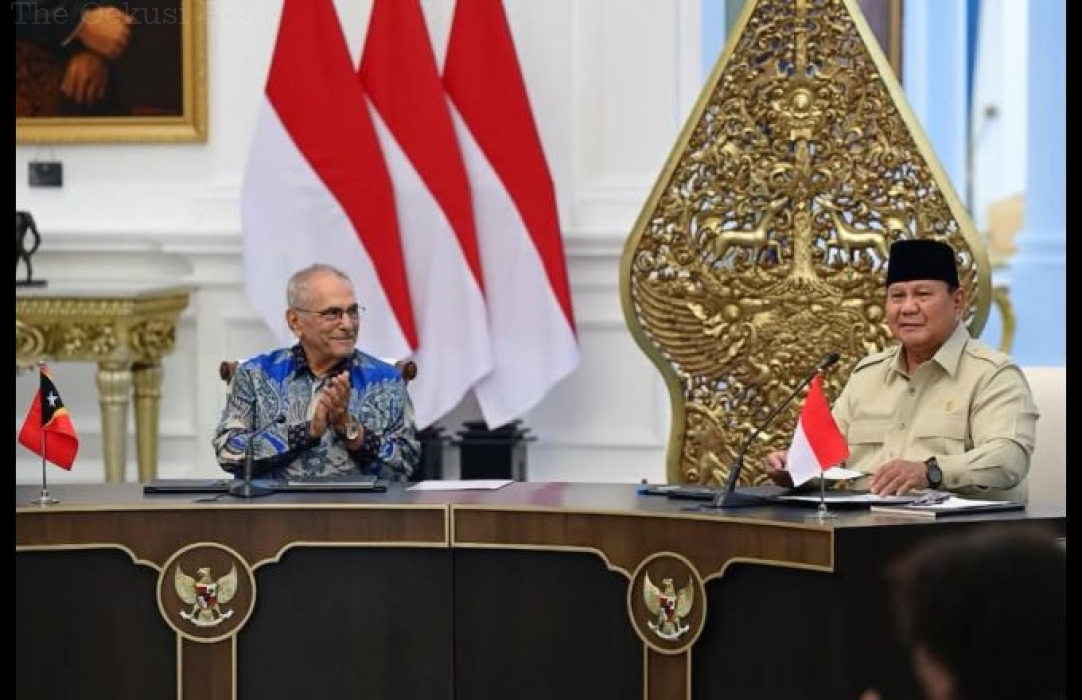
The speech traced a rapid deepening of ties over the past two years. Ramos-Horta pointed to his July 2024 state visit to China at President Xi Jinping's invitation, which elevated the relationship to a Comprehensive Strategic Partnership with agreements spanning the Belt and Road Initiative, agriculture, the digital economy and infrastructure.
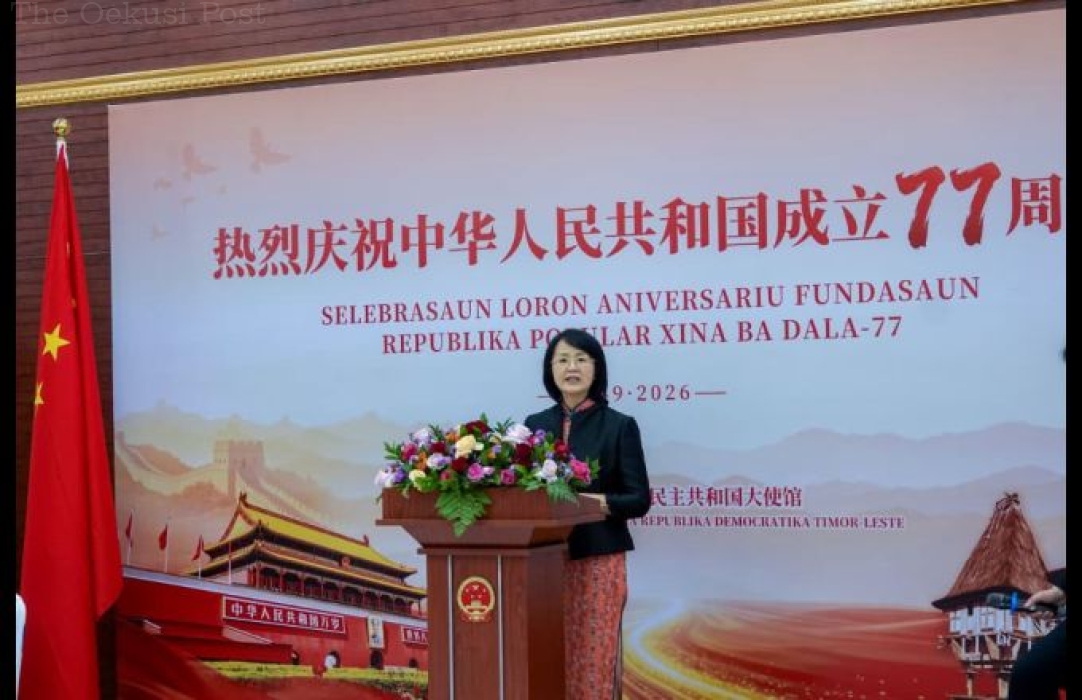
He also noted last month's visit by Chinese Defense Minister Dong Jun to Dili, during which coinciding with the 50th anniversary of FALINTIL the two sides formalized an agreement to build the Timor-Leste–China Friendship Hospital, calling it a visit that connected "past resistance and sacrifice with our present efforts to build a secure, modern state."
The president held up China's poverty-reduction record as instructive for Timor-Leste, saying that while Dili does not seek to "replicate its path entirely," China's experience with "rural development, agriculture, food security, infrastructure, and technology" offers lessons for a young nation.
He also endorsed Beijing's global initiatives the Belt and Road Initiative, the Global Development Initiative, the Global Security Initiative and the Global Governance Initiative as offering the Global South paths to "pursue security through dialogue rather than confrontation," and welcomed China's "Zone of Peace" framing for regional security.
On economics, Ramos-Horta said the relationship must now evolve into what he called "a balanced, two-way economic relationship."
He cited US$72 million in Chinese imports to Timor-Leste in the first half of 2026 alone, and pointed to Beijing's zero-tariff treatment across all taxable tariff lines paired with Timor-Leste's WTO and ASEAN accession as an opening for Timorese coffee, agricultural goods and fisheries exports.
He referenced a framework agreement with the Caizi Group covering potential tourism, housing, agriculture and industrial investment, but cautioned that "investment must always be measured by human outcomes: the local jobs created, skills transferred, and opportunities provided for our youth."
He closed by describing the relationship's foundation as resting on "shared history, proven friendship, principled alignment, and a productive economic future," and offered a toast that the friendship between the two nations "grow from strength to strength."