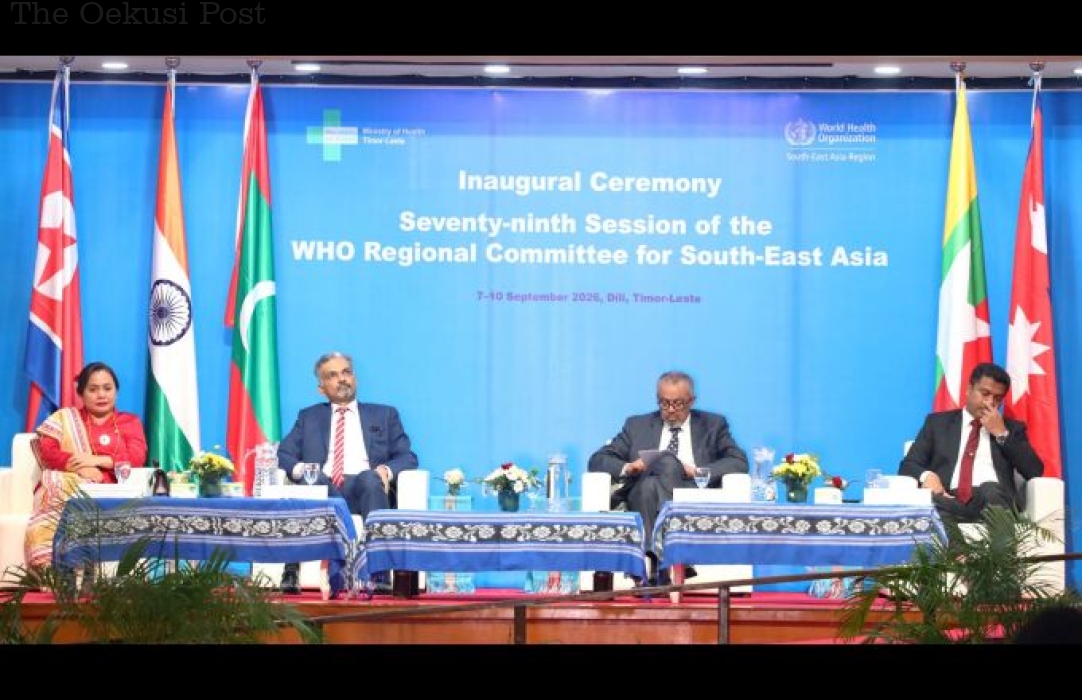
DILI (TOP) - Timor-Leste opened its doors this week to one of the World Health Organization's most consequential regional gatherings, hosting the Seventy-ninth Session of the WHO Regional Committee for South-East Asia in Dili from September 7 to 10, 2026. It is the first time in eleven years that the country has hosted a meeting of this body the WHO's principal governing platform for a region spanning ten member states: Bangladesh, Bhutan, the Democratic People's Republic of Korea, India, Maldives, Myanmar, Nepal, Sri Lanka, Thailand, and Timor-Leste itself. The Regional Committee meets annually to review health progress, adopt resolutions binding on member states, and set strategic direction for a region home to nearly two billion people.
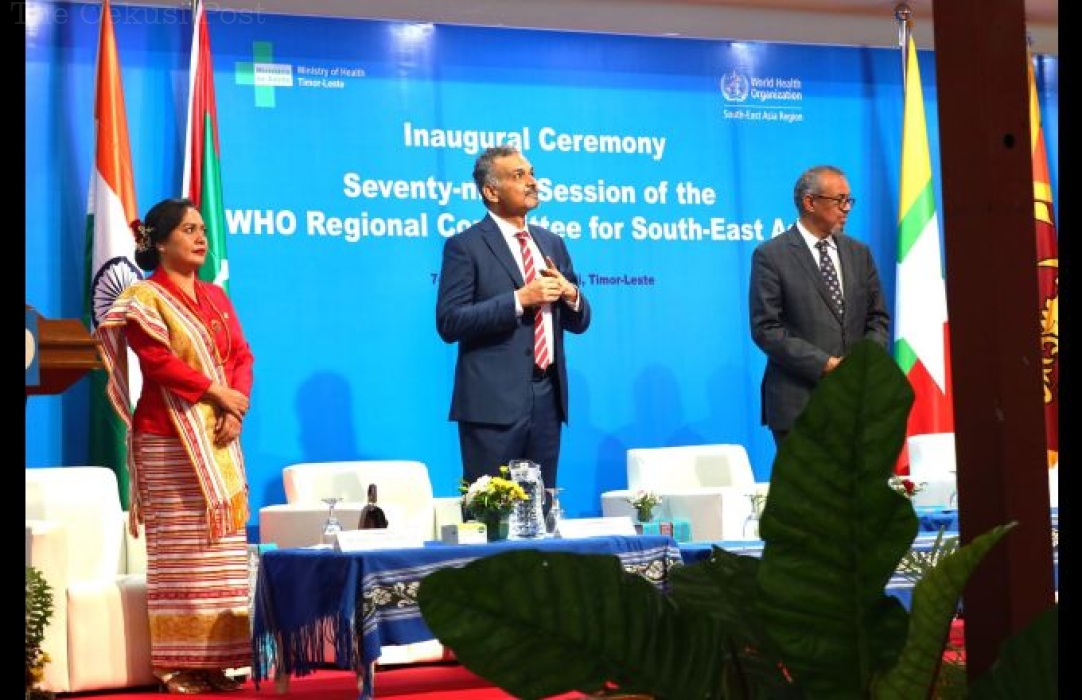
The symbolism of the venue was immediate and, for many observers, the real headline of the week. WHO Director-General Dr. Tedros Adhanom Ghebreyesus arrived in Dili for what is his first official visit to the country, joining health ministers, senior officials, and delegates from across the region for the four-day session's opening on Monday. Nilesh Buddha, Officer in Charge of the WHO Regional Office for South-East Asia, accompanied him. For a nation whose international visibility has more often been tied to post-independence rebuilding, humanitarian aid, or its status as one of the region's smallest and youngest states, the hosting role represents a quiet but meaningful repositioning from subject of the region's attention to convener of it.
Prime-Minister Kay Rala Xanana Gusmão set the tone in his keynote address at the opening session, calling on member states to place equity at the center of health policy. No person, he argued, should be denied the chance of a healthy life because of where they were born, where they live, or what they can afford. He urged delegates to attend to the wider determinants of health nutrition, clean water, sanitation, and education and called for essential services to be protected and health workers properly supported and resourced. The framing carried particular weight coming from the leader of a country that has itself contended with many of the very gaps he described: stretched health infrastructure, workforce shortages, and a young population with significant unmet needs.
Behind the scenes, the hosting effort had been weeks in the making. Health Minister Elia A. A. dos Reis Amaral briefed the Council of Ministers in early August on the inter-institutional coordination, logistics, protocol, and security arrangements needed to receive delegations from across the region. She described the session publicly as an opportunity to strengthen regional health cooperation, promote the country's international profile, and reaffirm its national commitment to strengthening domestic health systems language that suggested Dili saw the event as more than ceremonial.
The substantive agenda facing delegates is dense. Elimination targets for measles and rubella and continued polio eradication efforts feature prominently, alongside malnutrition and health emergency preparedness issues with direct resonance for Timor-Leste, which has itself worked toward disease-elimination milestones in recent years, including validated progress on lymphatic filariasis. Governance matters tied to the WHO's global programme budget are also on the table, along with issues arising from the 79th World Health Assembly and the 158th and 159th sessions of the WHO Executive Board. Running parallel to the main programme, a series of technical sessions is addressing sexual and reproductive health, gender equality, climate change and health, climate financing for the health sector, health security, and immunisation and the prevention of vaccine-preventable disease outbreaks.
Perhaps the most closely watched outcome will be the anticipated adoption of the Dili Declaration on equitable access to specialised care a document whose name will now be permanently tied to this small Timorese capital, regardless of how the broader session is remembered. Sri Lanka's Health and Mass Media Minister Nalinda Jayatissa, who has chaired the Regional Committee since being elected to the position at the 78th session in Colombo last October, is presiding over proceedings in Dili until a successor is elected one of several procedural matters expected to close out the week alongside the formal resolutions and decisions on September 10.
Delegations from India, Sri Lanka, Bangladesh, the Maldives, and other member states have used the sidelines for bilateral meetings, adding a layer of regional diplomacy beyond the formal committee sessions themselves.
Whatever the policy outcomes on measles targets, emergency fund allocations, or the specifics of the Dili Declaration regional observers are watching the choice of venue itself as the more durable story: a small state, more accustomed to being written about than convening others, spent four days in September setting the agenda for its neighbors instead of simply attending someone else's.
This event is a notable diplomatic moment the country hosting a major multilateral health body for the first time in over a decade, with the WHO chief's first-ever visit.