DILI (TOP) - More than 400 detained, new cybersecurity law and cooperation with ASEAN. Timor-Leste tries to stop the movement of fraud networks from Southeast Asia.
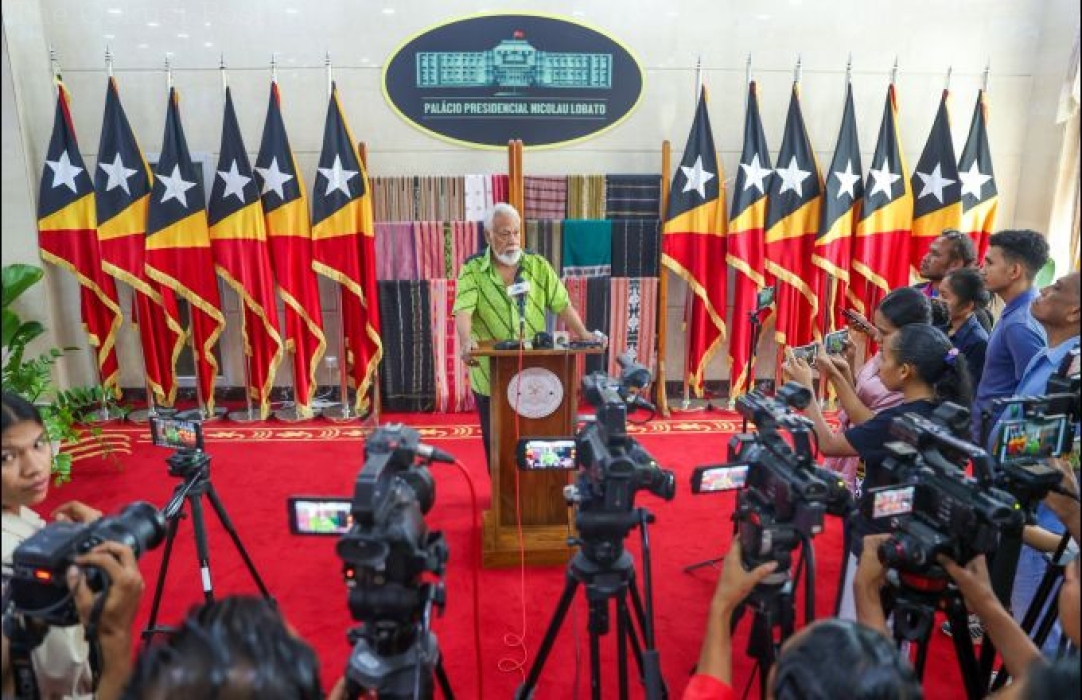
Prime Minister of Timor-Leste, Kay Rala Xanana Gusmão stated on Thursday that the Government will apply a zero-tolerance policy towards illegal online activities to protect national security and Timor-Leste's reputation.
"We will continue to strengthen the fight against these practices and cooperation relations with ASEAN countries [Association of Southeast Asian Nations] to combat them," said Kay Rala Xanana Gusmão.
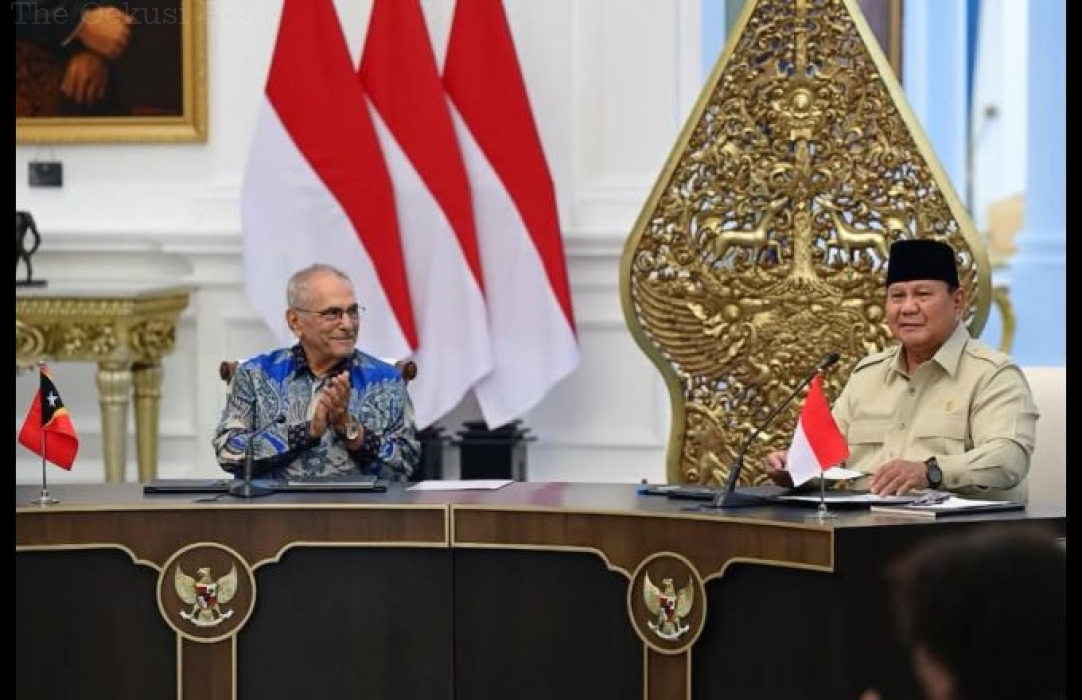
The Prime Minister was speaking to journalists at the end of the weekly meeting with the Timorese President, José Ramos-Horta, at the Presidential Palace in Dili, to whom he informed about the work the Government is developing to eliminate illegal online activities.
Related article: The waves of scam call center and online game originated from Ambeno and spread in Dili
In recent weeks, Timorese police authorities have detained more than 400 people, mostly citizens of China, Cambodia, and Indonesia, suspected of involvement in illegal online activities, particularly related to illegal gambling and fraud.
This Thursday and Wednesday, another 19 foreigners were detained on suspicion of illegal online activities.
A report released this week by the United Nations Office on Drugs and Crime (UNODC) indicated that recent developments in Timor-Leste show a shift in the centers of fraud in Southeast Asia.
In September of last year, the UNODC had already warned of the increased presence of criminal networks in Oe-Kusi Ambeno, the Timorese enclave located in Indonesian territory on the island of Timor. According to the UN agency, recent investigations show that the region has begun to be influenced by organized criminal activities.
The Timorese Council of Ministers approved on Wednesday a draft bill requesting legislative authorization from the National Parliament regarding cybersecurity crimes and criminal procedure, and the definition of the legal framework for the national cyberspace.
The request aims to grant the Government authorization to approve an integrated cybersecurity package, which includes the National Cybersecurity Strategy, the legal framework for national cybersecurity, the regime for digital services, and the criminal and procedural framework applicable to crimes committed in a digital environment, including rules relating to the collection of electronic evidence.
The legislative authorization will also allow the Government to define new types of crimes committed in a digital environment, establish mechanisms for the prevention, investigation, combating and repression of cybercrime, the collection of digital evidence, as well as the removal or blocking of illicit content, among other things.
Based on recent reporting, the situation in Timor-Leste has escalated significantly through mid-2026, moving from an emerging concern to a full-blown crackdown.
Background: how it started
Timor-Leste had largely avoided the scam-center wave sweeping Southeast Asia until 2025. That changed when the government's digital free trade zone in the Oe-cusse Ambeno exclave (established December 2024) attracted scrutiny. The UN Office on Drugs and Crime warned in September 2025 that transnational organized crime networks had infiltrated Oecusse through foreign investment schemes, and analysis linked the operations to convicted cybercriminals, offshore gambling operators, and triad-linked networks. An August 2025 police raid on an Oecusse hotel turned up SIM cards and Starlink satellite devices matching patterns seen at scam centers elsewhere in the region
Online gambling license revoked
Around this period the government revoked the country's first online gambling license — issued only six months earlier — citing risks to national security, social stability, economic integrity, and international reputation, though it gave no further detail. The prime minister personally oversaw the shutdown of an associated "Grand Dragon" lottery outlet in Dili's main mall, which reportedly shared ownership with the sanctioned gambling operator, Grand River Universe (GRU); GRU said it respected the decision and claimed it had no active gaming business in Timor-Leste.
A wave of raids through mid-2026
Enforcement intensified sharply this year:
- August 19, 2024, the President of the Authority for the Special Administrative Region of Oe-Cusse Ambenu (RAEOA), Rogério Tiago de Fátima Lobato, accompanied by the Coordinator of the Executive Commission of the Special Economic Zone for the Development of Oe-Cusse-Ambenu (AKE), Gonçalves celebrated the signing of a Memorandum Of Undertanding (MoU) with Golde River Universe.
- 11 April 2025, the General Inspectorate of Gambling and Lottery in the capital Dili, signed a national concession contract with Golden River Universe Lda, led by Datuk Harry Ng from Malaysia.
- July 7, 2025, President of the RAEOA Authority, Rogério Tiago de Fátima Lobato and Lim officially launched the Oe-Cusse Digital Center
- Monday, August 25, 2025 at 21:00 pm security authorities demolished the Oe-Upu Hotel in Oe-Kusi Ambeno which is suspected to be turned into a Scam Call Center and Online Game
- 11 September 2025, the UN Office on Drugs and Crime (UNODC) warned that foreign criminal syndicates had infiltrated Timor-Leste to establish scam compounds similar to those in Cambodia, Laos and Myanmar
- Ten days later, on September 21, 2025, Minister of the Presidency of the Council of Ministers, Hermenegildo Pereira published a post on Facebook alleging that foreign criminal syndicates brought $45 million to Timor-Leste by private plane to bribe government members to approve its operating license.
- October 1st, 2025, the National Parliament voted to cancel all licenses related to gambling activities, and Prime Minister Kay Rala Xanana Gusmão himself participated in the authorities' closure of the Grand Dragon lottery booth
- 2ndOctober 2025, the Government of Timor-Leste issued Government Resolution No. 54/2025, announcing the immediate revocation of all concessions, licenses, and authorizations related to the operation of online gambling and betting
- December 10, 2025, PNTL will search the office of Venture Tower ETO Tower in Colmera-Dili
- Friday 26 June 2026, Police raided a Scam Call Center and Online Game at a hotel in Tibar.
- July 9, 2026, security authorities raided and arrested nearly 100 foreign citizens in Manleuana and Bebonuk, suspected of involvement in Scam Call Center and Online Game operations.
- August 2025: 10 suspects arrested at Hotel Oe-Upu, Oecusse; this was followed by the Dragon Lottery case (7 Chinese nationals) and 11 arrests in Jita Plaza/Colmera, Dili.
- June 26, 2026: Police dismantled a scam call center in Tibar, Liquiçá, detaining 61 foreign nationals (mostly Indonesian, some Cambodian), tied to a network that had reportedly relocated from Cambodia and been operating in Timor since around January/February 2026.
- July 8, 2026: Further raids netted 110 suspects (96 sent to criminal process), plus 53 more (29 in Manleuana, 24 in Metiaut).
- July 14, 2026: 27 suspects detained in a Fomentu II raid, with one later placed in preventive detention by the court.
- July 13, 2026: Raids in Ulmera (Likisá) and Kampung Baru/Komoro netted 90 more suspects (about 76 Indonesian, 14 Chinese).
- July 19, 2026: A joint police/immigration team dismantled another network in Bedois, Suku Bekora, securing seven foreign nationals staying in a house run by a Chinese national.
By mid-July 2026, security forces had detained a total of 342 people across these various operations.
Legal proceedings
Courts have been processing detainees on charges including computer fraud, criminal association, and illegal gambling, alongside money laundering allegations. Measures applied include residency/identity terms, travel bans, and bail set around $2,500–$3,000 per defendant, with passports confiscated in some cases; non-compliance triggers a switch to preventive detention.
Government and international response
On July 15, 2026, the government publicly stated it would not tolerate any illegal activity, including online scams, occurring on Timorese territory. The UN has framed online scam operations as a new face of human trafficking, given the crackdown's scale and the international mix of victims and perpetrators.
Bottom line: Timor-Leste has gone from being seen as relatively insulated from the region's scam-center epidemic to becoming an active target for these networks (largely Chinese and Cambodian-linked operators using Indonesian and Chinese nationals as staff), prompting an intensive multi-agency crackdown since June 2026 alongside revocation of online gambling licensing.