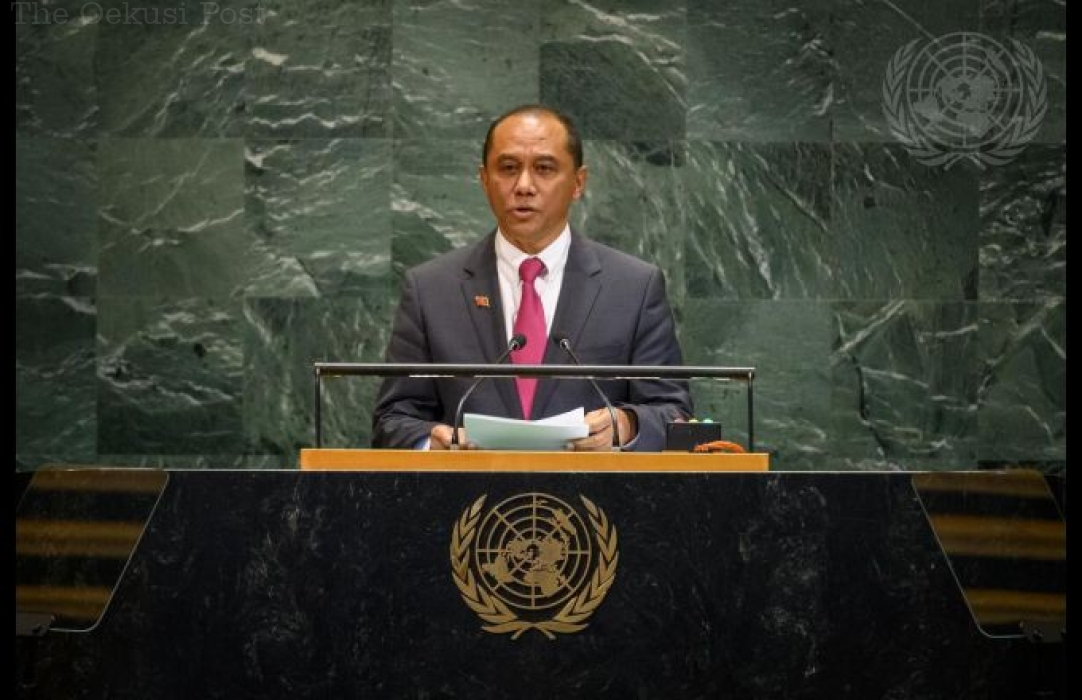
DILI/NEW YORK (TOP) - The Permanent Representative of the Democratic Republic of Timor-Leste (RDTL) to the United Nations (UN), Ambassador Díonisio da Costa Babo Soares told the United Nations Security Council that the continued suffering of civilians in conflict zones around the world is not primarily a failure of international law, but a declaration of its own implementation at the Arria-Formula meeting entitled "Maintaining International Law in Situations of Armed Conflict".
The Arria-Formula format is an informal mechanism that allows Security Council members and invited states to hear from experts, affected states, and civil society outside the Council's usual chamber proceedings. It has increasingly become a venue for smaller and conflict-affected states Timor-Leste among them to press the fifteen-member Council on how existing legal frameworks are being applied, or ignored, in active wars.
In its national statement, Timor-Leste argued that the core instruments already exist to protect civilians in wartime: the United Nations Charter, international humanitarian law, and international human rights law. The problem, Dili said, is not a lack of rules but a persistent failure to enforce them. Civilian casualties, displacement, and destroyed infrastructure across today's conflicts, the statement said, are the visible evidence of that gap between legal commitment and lived reality.
Timor-Leste drew directly on its own history to make the point. As a nation that emerged from a prolonged struggle for independence, followed by a difficult period of post-conflict reconstruction, Timor-Leste said its own experience showed the value of international solidarity, reconciliation, dialogue, and cooperation in transforming a broken state into a functioning one. That trajectory from occupation and violence to statehood and, eventually, regional engagement has increasingly become the reference point Dili uses when it speaks on peace and security issues at the UN, positioning itself as a state that has lived through what the Council is discussing in the abstract.
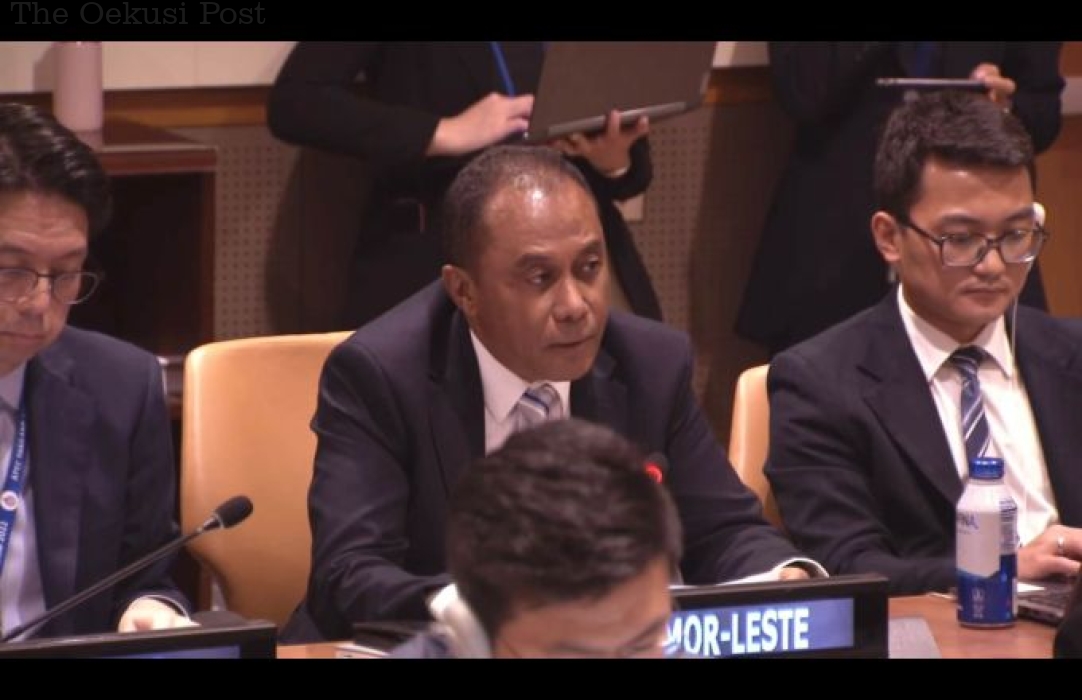
Timor-Leste's intervention reaffirmed several baseline principles it said must bind all parties to armed conflict without exception: respect for sovereignty, territorial integrity, the right to self-determination, and the peaceful settlement of disputes. It stressed that international humanitarian law applies universally and unconditionally and pointedly rejected the logic, invoked in numerous ongoing conflicts, that violations by one side can justify violations by another.
On the protection of civilians specifically, Timor-Leste's statement called for safeguarding not only civilian populations but also medical and humanitarian workers, civilian infrastructure, and cultural and religious heritage sites, which have come under repeated attack in recent conflicts from Gaza to Ukraine to Sudan. It further called for rapid, unimpeded humanitarian relief and an explicit prohibition on the use of starvation as a method of warfare an issue that has drawn growing international alarm amid documented blockades and access restrictions in several active war zones.
Beyond protection measures, Timor-Leste pressed for serious violations of international law to be investigated "promptly and impartially," with evidence preserved and victims protected language that echoes long-standing calls by human rights groups for better-resourced, faster-moving accountability mechanisms before evidence and witness testimony degrade.
Dili also urged the Security Council itself to do more of the institutional work that underpins accountability: strengthening monitoring and fact-finding capacities, investing in preventive diplomacy before crises escalate into war, and deepening cooperation with regional organizations that often have earlier visibility into brewing conflicts than the Council does.
Timor-Leste closed its statement on a broader note, arguing that lasting peace ultimately depends on political courage, trusted institutions, reconciliation, and sustained dialogue the same ingredients, the statement implied, that carried Timor-Leste itself through its own post-independence reconstruction. Turning legal commitments into real protection on the ground, Dili said, requires converting paper obligations into functioning humanitarian access, credible monitoring, and genuine accountability not simply reaffirming the law's existence.
The meeting adds Timor-Leste's voice to a broader and increasingly urgent debate at the UN over the erosion of international humanitarian law compliance amid conflicts in Gaza, Ukraine, Sudan, and elsewhere, where humanitarian organizations have repeatedly warned that attacks on hospitals, aid convoys, and civilian infrastructure are occurring largely without consequence. Timor-Leste's Permanent Mission to the UN in New York, headed by Ambassador Dionísio da Costa Babo Soares, has in recent sessions of the General Assembly and its committees also pushed for closing long-standing gaps in international criminal law, including the absence of a dedicated global treaty on crimes against humanity.
For Timor-Leste, a state that gained independence in 2002 after a UN-backed process following decades of occupation and a brutal, UN-authorized intervention to end post-referendum violence in 1999, statements like this one are not abstract diplomacy. They are framed explicitly around Dili's own experience of war, foreign intervention, and the long, difficult work of rebuilding institutions and trust afterward a "small-state" perspective the country has increasingly sought to bring into rooms, like the Security Council, historically dominated by the interests of major powers.