


By the Editorial Board | The Oekusi Post
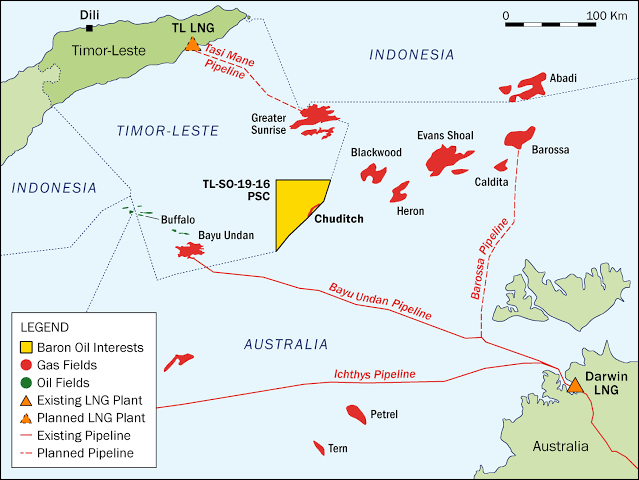
AMBENO (TOP) - Timor-Leste's long-promised gas pipeline to the south coast is taking physical shape. The Ministry of Petroleum and Mineral Resources (MPRM) has awarded three offshore survey contracts for the Greater Sunrise and Pipeline Highway projects. Together with the geophysical contract awarded in July 2026, they cover the seabed data needed to route gas from Greater Sunrise and Bayu-Undan to Natarbora. Offshore work begins in January 2027, and Front-End Engineering Design is expected to follow later that year.
This is a milestone, and we say so plainly. For decades, the idea of bringing Timorese gas onshore was more slogan than schedule. Survey vessels, seabed cores and a twelve-month metocean campaign are the first evidence that the schedule is real.
But a milestone is also the right moment to ask hard questions, and the public announcement leaves many of them unanswered.
Who is winning the work?
Taka Hydrocore Indonesia, partnered with TDI-Brooks, holds the light geotechnical survey. Fugro Singapore Marine holds the heavy geotechnical survey, the metocean survey and, since July, the geophysical survey. On the announced facts, one foreign contractor now holds three of the four survey packages. That may reflect the best bids. It may also reflect a narrow field. The public cannot tell, because the announcement does not say how the contracts were tendered, how many companies competed, or what any of them are worth.
Where is the Timorese participation?
The surveys will be conducted in Timorese waters, on a Timorese seabed, for a project financed by Timorese public money and Timorese hopes. Yet no Timorese firm appears in the announcement. If subcontracting, training or local employment commitments exist, the Ministry should state them. If they do not, that is a finding in itself. Small states are too often the site of major projects rather than participants in them, and a pipeline that is surveyed, designed and built with the country only as landlord would repeat that pattern.
Who will see the environmental data?
The environmental baseline study will cover 16 provisional stations, with 40 sediment samples and 40 water samples. A baseline is only valuable if it is credible, and it is only credible if it can be scrutinized. Timorese scientists, civil society and journalists should have access to the methodology and the results, not a summary. The route crosses depths from 20 metres to 3,000 metres of water. What is learned there belongs to the public that will live with the consequences.
What happens next?
FEED is where the largest commitments are made and where scrutiny matters most. The habits set now will carry into the far larger contracts to come: whether tenders are open, whether values are disclosed, whether parliament and the press are given the information to ask questions.
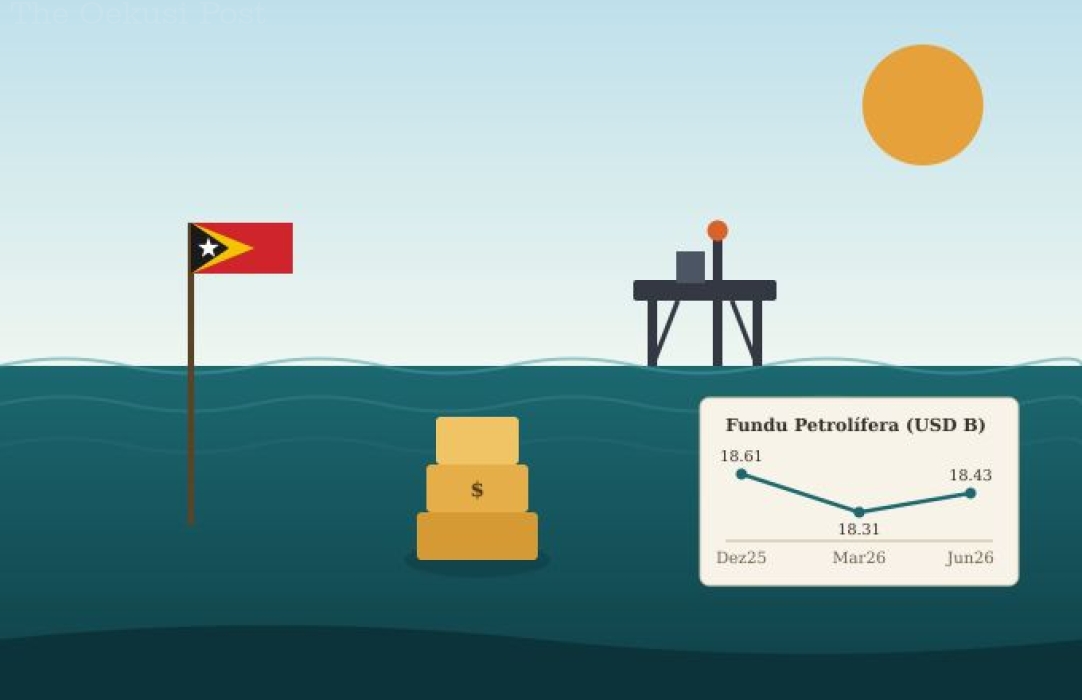
Timor-Leste has watched the Petroleum Fund be drawn down and its main fields near depletion. It has every reason to want this project to succeed. It also has every reason to insist that it succeed transparently. Success and secrecy are not the same thing, and only one of them builds public trust.
We call on the Ministry to publish the procurement process, the number of bidders and the contract values for all four survey packages, and to commit to releasing the environmental baseline data. Good projects can withstand questions, and this one should be asked them now, before FEED begins.
This is the editorial position of The Oekusi Post. The Oekusi Post will keep reporting on the Greater Sunrise and Pipeline Highway projects as the offshore campaigns begin.