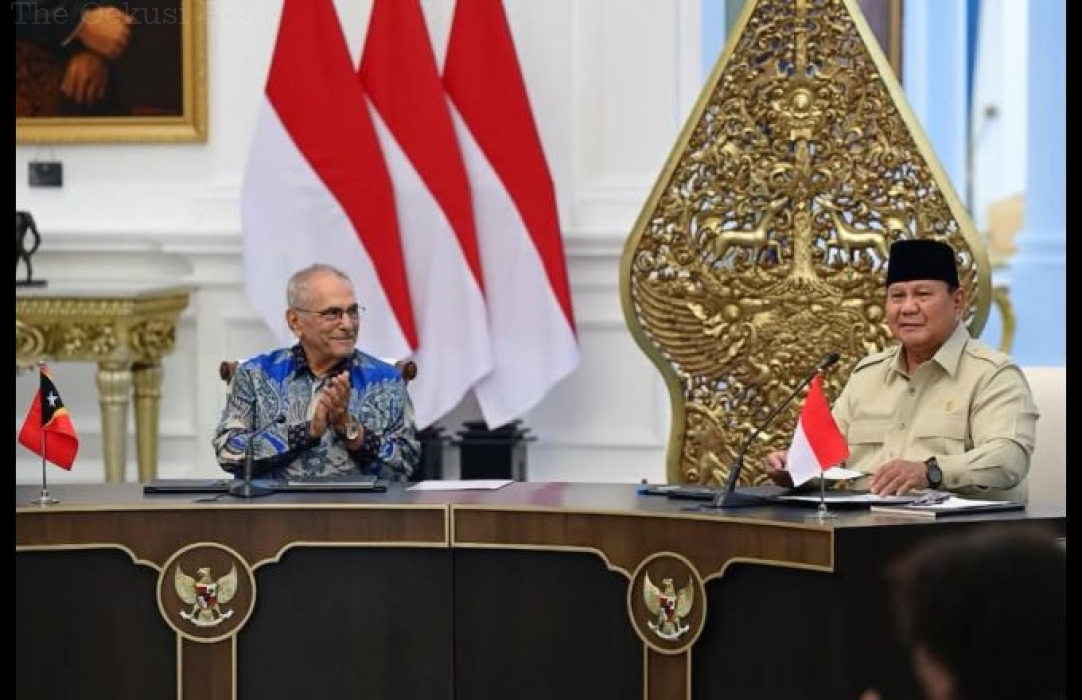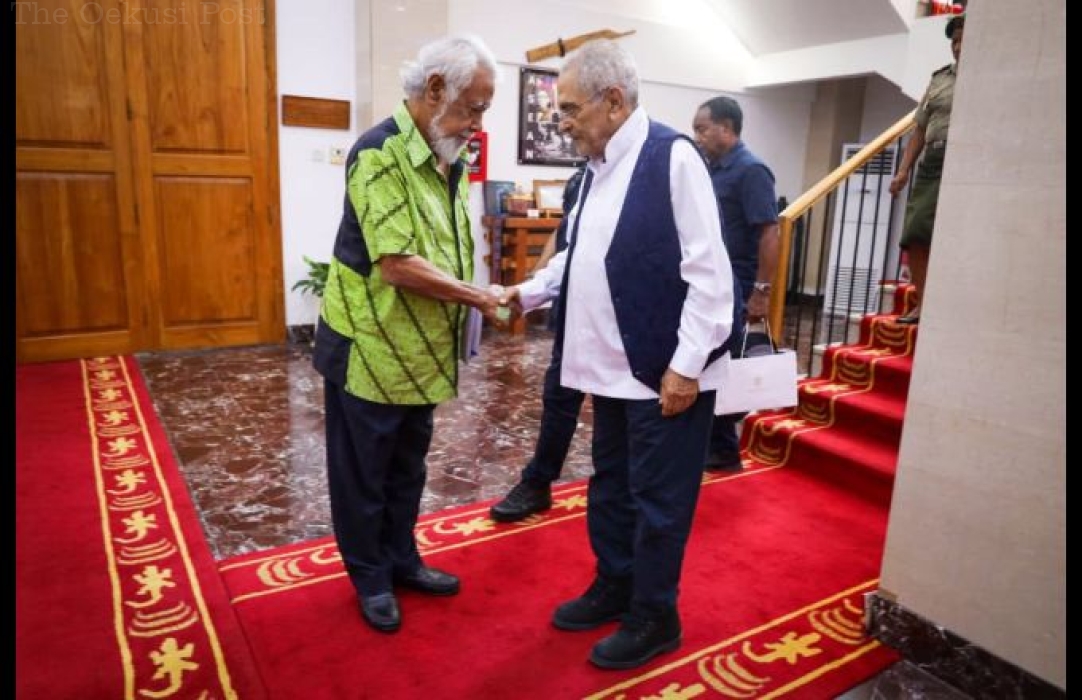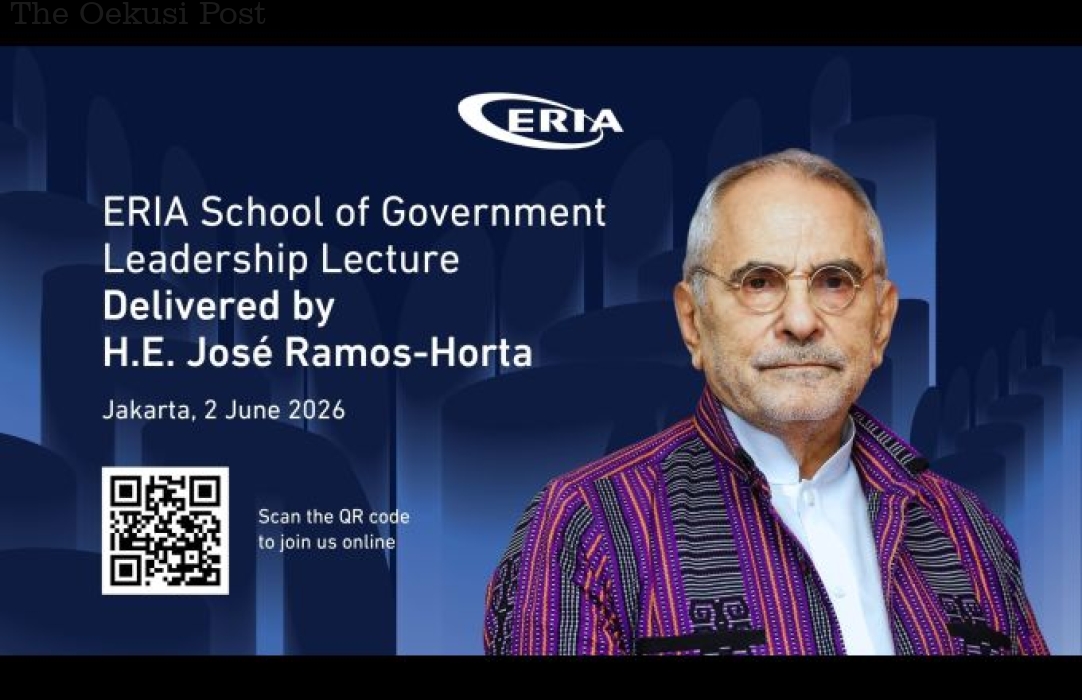
JAKARTA (TOP) - President of the Republic and 1996 Nobel Peace Laureate, José Ramos-Horta delivered his fourth lecture at the ERIA School of Government Leadership in Jakarta, Indonesia.
The Economic Research Institute of ASEAN and East Asia (ERIA) is an international organization based in Jakarta, Indonesia. It was established by leaders of 16 countries at the 3rd East Asia Summit in 2007 to support regional economic integration, narrow development gaps, and promote sustainable economic growth in ASEAN and East Asia.
Southeast Asia’s governance landscape has undergone dramatic transformations over the past few decades, shaped by complex political transitions, economic integration, and evolving regional dynamics. The ERIA School of Government remains committed to fostering high-level discussions on governance, leadership, and diplomacy in Southeast Asia.
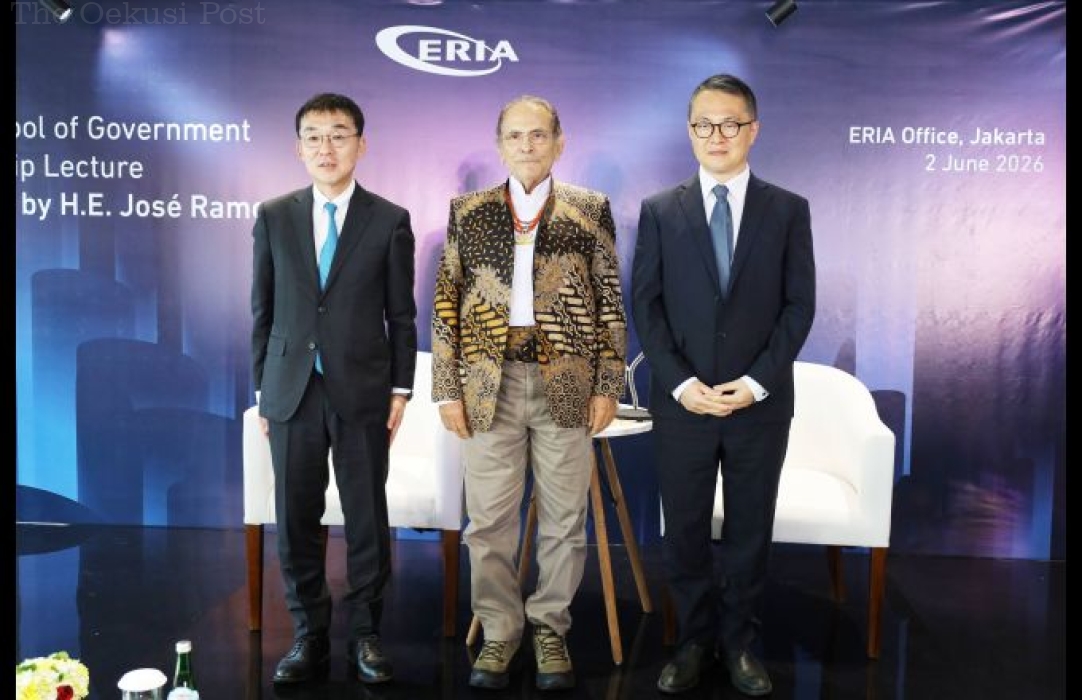
Through its executive training programs, leadership dialogues, and institutional memory initiatives, the ERIA School of Government provides a platform for thought leadership and policy development.
The ERIA School Government Leadership Lecture Series serves as the premier platform for distinguished leaders to share insights, experiences, and perspectives on regional governance, leadership, and cooperation.
The series was inaugurated by Susilo Bambang Yudhoyono, the sixth President of Indonesia, with the aim of preserving ASEAN’s institutional memory and fostering regional learning through engagement with esteemed thought leaders.
According to this vision, ERIA School of Government is honored to welcome José Ramos-Horta, President of Timor-Leste for the fourth and seventh time, for a distinguished Leadership Lecture on June 2, 2026.
President Horta's lecture focused on “Leadership in Perilous Times: Human Rights, Nation Building, and Regional Diplomacy.”
The Oe-Kusi Post (TOP) observed President Horta's lecture at ERIA lasted almost five (5) hours and was attended by former Minister of Foreign Affairs of Indonesia such as Marti Natalegawa, Hassan Wirajuda, Dino Patti Djalal, Dean/Director General of ERIA School of Economic Leadership, Nobuhiwa and Government Economists. Indonesia, Romora Edward Sitorus including diplomats accredited in Indonesia also participated.
The opening lecture by the Dean and Director General of the ERIA School of Government, Nobuhiro Aizawa, welcomed President Ramos-Horta and highlighted the importance of learning directly from leaders who have navigated major political and historical transitions.
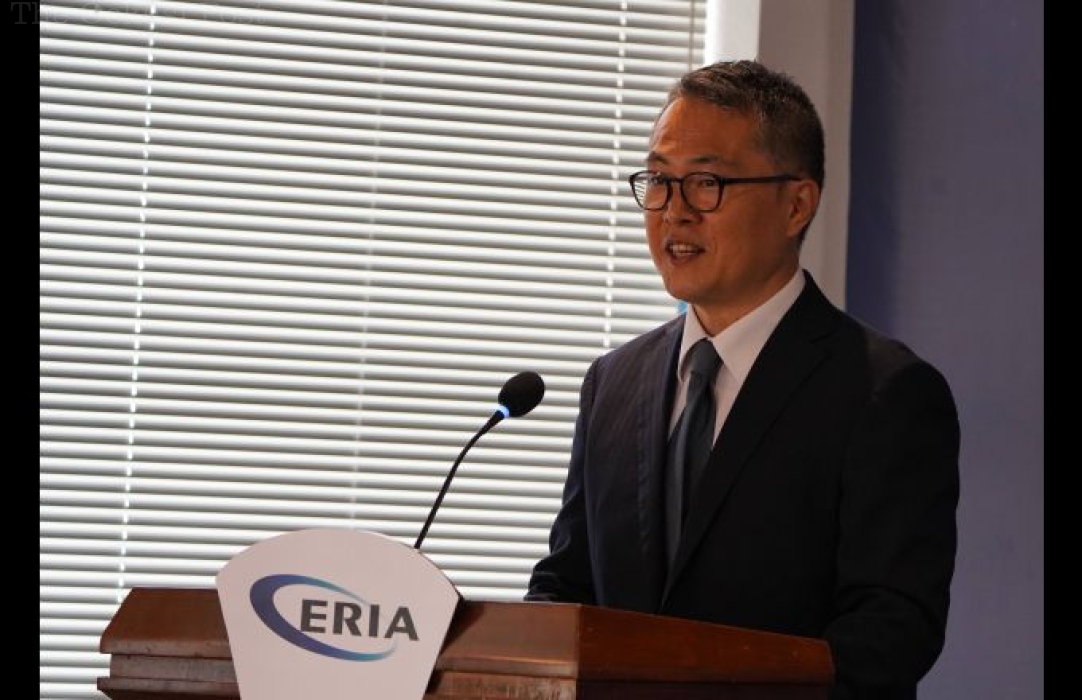
“Timor-Leste provides a profound model of peace and reconciliation. It is a reminder of what leadership can do, where adversarial history can be transformed into a collaborative future,’ said Aizawa in his opening lecture at ERIA headquarters in Senayan, Jakarta, Indonesia on Tuesday, June 26, 2026.
He added that this transition, defined by a thoughtful transformation from reconciliation to active friendship, is the cornerstone of the regional stability enjoyed by all today.
“Without the reconciliation and friendship between Timor-Leste and Indonesia, we would not have the Southeast Asia we enjoy today. It is precisely this model that informs our optimistic outlook on Timor-Leste’s accession to ASEAN and its growing integration within the region,” he said.
Aizawa also emphasized the importance of preserving the leadership experience for future generations.
“At the ERIA School of Government, we believe that sharing these invaluable experiences is essential to nurturing a future generation of leaders and restoring institutional confidence in the region. The finest leadership experiences of Southeast Asia have often been underappreciated and understudied. President Ramos-Horta’s leadership journey offers exceptional lessons for policymakers, practitioners, and scholars alike,” he added.
Tetsuya Watanabe, President of ERIA, underscored the importance of learning from leaders who have shaped the region’s modern history.
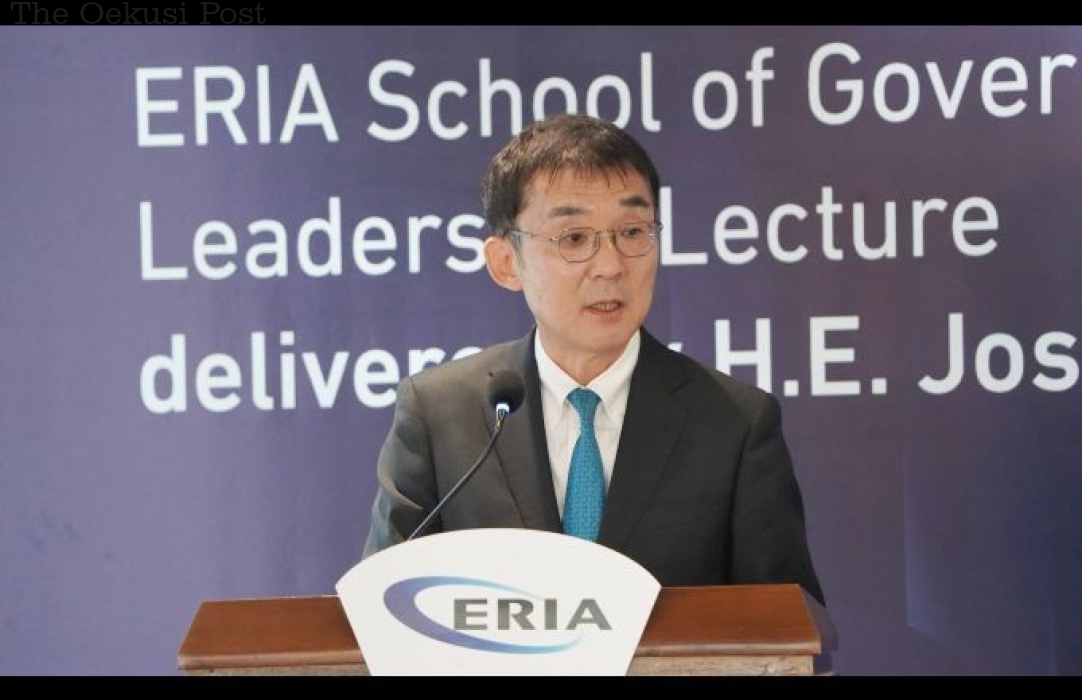
“Future leaders should learn not only from books, policy papers, and classrooms, but also from those who have experienced history firsthand and helped shape it,” he said.
“President Ramos-Horta’s lifelong commitment to peace, diplomacy, and regional co-operation offers valuable lessons that remain highly relevant today. At a time of growing global uncertainty, his experiences remind us of the importance of dialogue, trust-building, reconciliation, and international co-operation,” Watanabe added.
During the lecture, President Ramos-Horta reflected on Timor-Leste’s long journey from conflict to independence and its efforts to build lasting peace with its neighbours. Drawing from decades of diplomatic engagement, he emphasised that reconciliation requires political courage, patience, and a willingness to look beyond the grievances of the past.
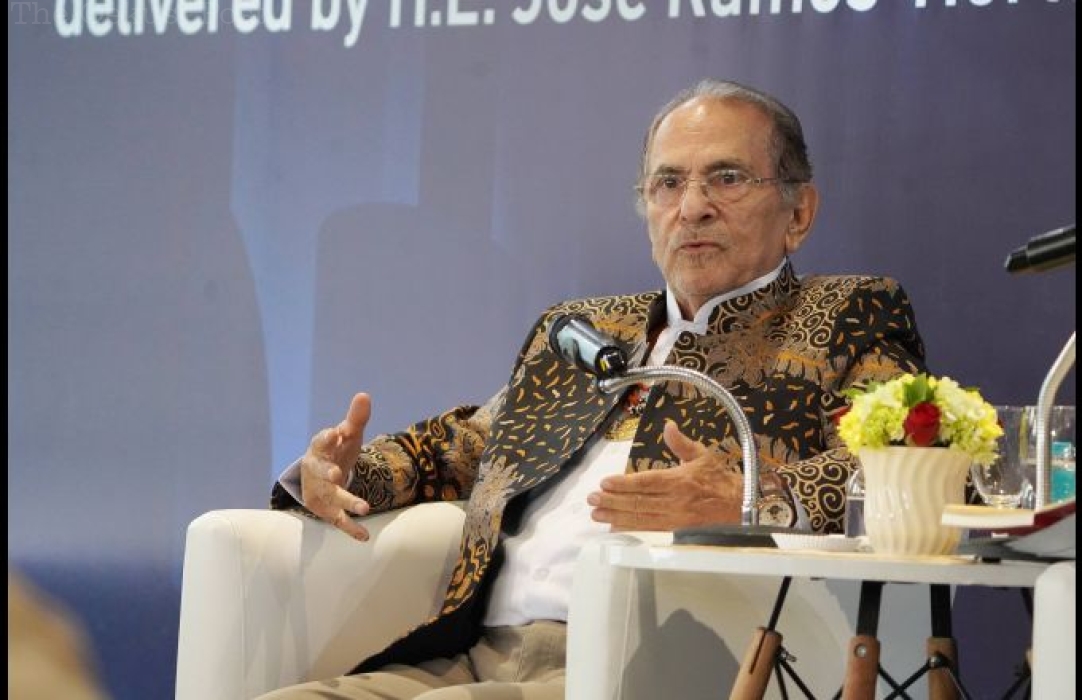
“True regional stability is not merely the absence of hostility, but the result of deliberate, inclusive efforts to transform historical adversaries into sustainable partners,” he said.
Reflecting on relations between Timor-Leste and Indonesia, President Ramos-Horta highlighted reconciliation as one of the region’s most significant peace building achievements. He recalled the contributions of Indonesian leaders, including B.J. Habibie, Abdurrahman Wahid, and Megawati Soekarno Putri, during Timor-Leste’s transition to independence and stressed that friendship and co-operation ultimately proved stronger than conflict.
“Never once in our struggle was a single Indonesian civilian targeted,” he said, emphasizing that even during periods of conflict, Timor-Leste’s leadership sought to preserve the foundations for future reconciliation.
President Ramos-Horta noted that the spirit of reconciliation extended beyond political agreements and was reflected in the relationship between the peoples of both countries.
“Not a single Timorese felt discrimination,” he said, recalling the support and acceptance many Timorese received in Indonesia during and after the transition period.
President Ramos-Horta also discussed the importance of national reconciliation, arguing that sustainable peace cannot be achieved through revenge or division. Instead, societies must find ways to acknowledge the past while creating opportunities to move forward together.
“We went for national reconciliation,” he said, describing the approach taken by Timor-Leste following independence.
Beyond Timor-Leste’s own experience, President Ramos-Horta addressed ongoing conflicts in Myanmar and the Middle East. He reiterated his long-held belief that dialogue and sustained diplomatic engagement remain essential for resolving even the most difficult conflicts, while cautioning against approaches that prioritize confrontation over reconciliation.
Looking ahead to Timor-Leste’s accession to ASEAN, President Ramos-Horta expressed confidence that the country could contribute its own experience in reconciliation, dialogue, and peace building to the regional community.
“ASEAN has demonstrated that countries with different histories, cultures, and political systems can work together in pursuit of common goals,” he said. “Timor-Leste hopes to contribute its own experience in reconciliation and nation-building as we deepen our engagement with the region.”
The event was attended by diplomats, government officials, academics, and policy experts, reaffirming the ERIA School of Government’s commitment to cultivating future leaders and advancing dialogue on peace, governance, and regional co-operation across Southeast Asia.