


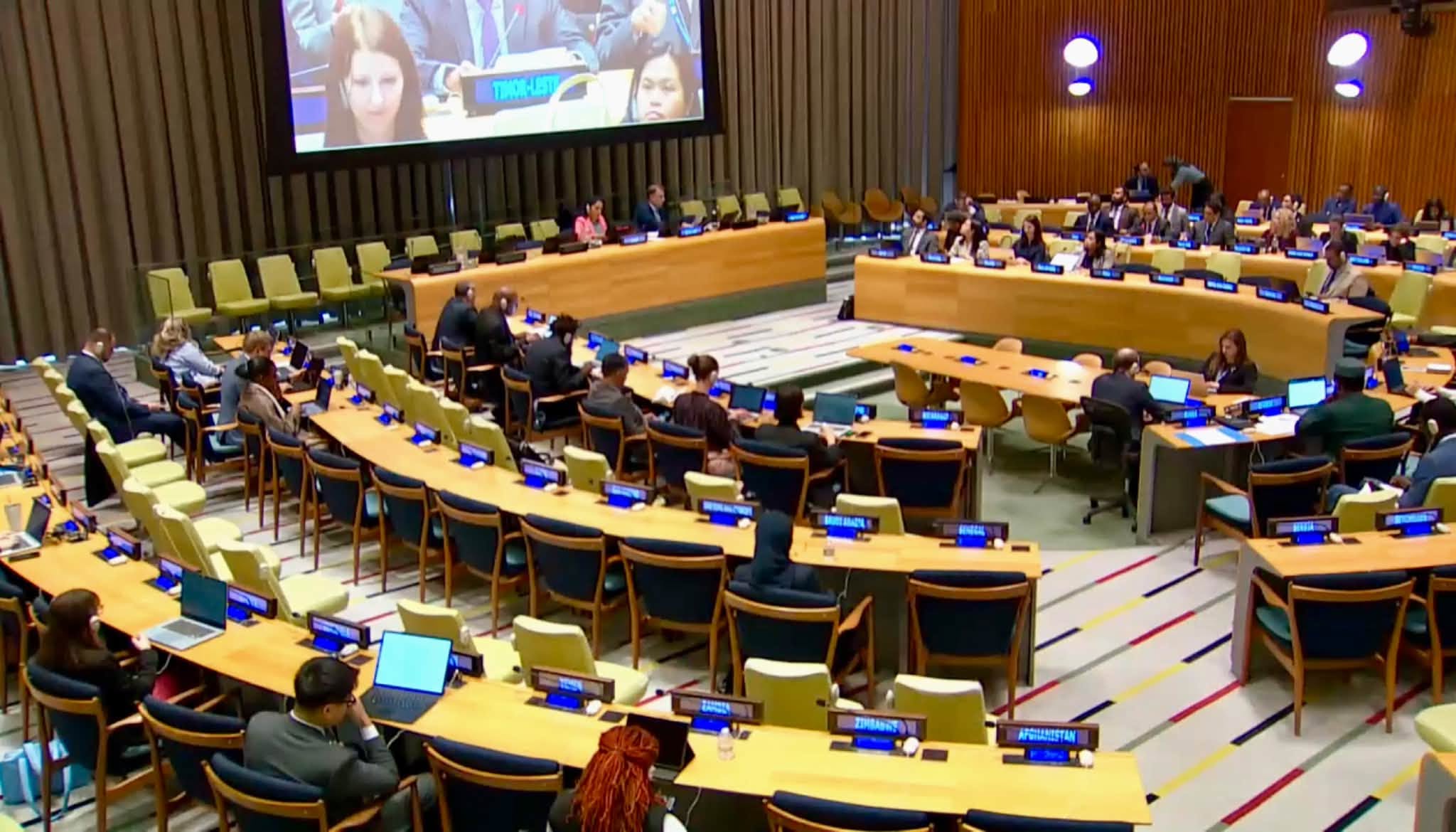
NEW YORK/AMBENO (TOP) - When Dionísio Da Costa Babo Soares rose at United Nations headquarters this week, he was not speaking only for Timor-Leste. As the country’s Permanent Representative to the UN, he delivered the joint statement of the Community of Portuguese-Speaking Countries (CPLP), a bloc of nine member states spread across four continents. The statement tied together two pressing questions: how the world should protect people when disasters strike, and how a cash strapped United Nations should pay for its work.
A shared vulnerability
Speaking during the Sixth Committee’s discussion of Item 88, the planned United Nations Conference of Plenipotentiaries on the Protection of Persons in the Event of Disasters, Babo Soares stressed that many CPLP members are highly exposed to natural hazards and to the effects of climate change, including rising sea levels.
For a country like Timor-Leste, a small half-island nation in a disaster-prone region, the point is hardly abstract. Babo Soares argued that a robust international legal framework is vital to better prevention, stronger risk reduction and broader cooperation in support of affected populations, all while respecting state sovereignty.
The CPLP welcomed the progress of the Preparatory Committee and thanked the Government of Thailand for agreeing to host the conference in Bangkok. It voiced hope that the committee’s groundwork would let the conference move smoothly into substantive negotiations.
The bloc also had a message for the negotiating table itself. It urged all participating states to negotiate efficiently, pragmatically and flexibly, to favour practical solutions, and to keep sight of the people the future convention is meant to protect.
A message on the UN’s finances
The statement then turned to the UN’s own finances. The CPLP welcomed the Secretary-General to the Fifth Committee, which handles administrative and budgetary matters, and thanked him for presenting the proposed programme budget for 2027. It also acknowledged his efforts over the past ten years. Appreciation went as well to the Vice Chair of the Committee for Programme and Coordination and the Chair of the Advisory Committee on Administrative and Budgetary Questions for their reports.
Although the eightieth session of the General Assembly has concluded, the CPLP said, the spirit of the Secretary-General’s UN80 reform initiative must endure. The group backed efforts to make the Organization more efficient and responsive, but drew a line: reforms must still allow mandates approved by member states to be fully implemented, and must preserve the balance among the UN’s three pillars. It also called for a clear distinction between lasting efficiency gains and the constraints imposed by the current liquidity crisis.
The bloc asked for due regard for geographical balance and gender parity as the UN restructures under UN80. It reaffirmed the importance of the UN’s capacity to help countries deliver the 2030 Agenda and the Sustainable Development Goals, with attention to the needs of developing countries, particularly least developed countries and small island developing states. Timor-Leste belongs to both groups.
In that context, the CPLP singled out the Resident Coordinator System, present in eight of its nine member states, as essential to a coherent, coordinated response tailored to national development priorities.
On peace and security, the group underlined the value of special political missions and peacekeeping operations for conflict prevention, mediation and peacebuilding. It called for adequate and predictable resources, matched by efficient and accountable management.
The CPLP also pressed the collective duty of states to finance the Organization under the Charter, and noted the importance of timely payment of assessed contributions for financial predictability. Its members, the statement said, will endeavour to pay on time, taking account of each country’s economic circumstances.
Language as inclusion
Babo Soares closed with a case for multilingualism. Despite their diversity, he said, CPLP members share a common language and a deep appreciation for multilingualism, along with the history and values behind their support for multilateralism. Portuguese, spoken by more than 270 million people and an official language in 33 international organizations, shows how linguistic diversity can widen inclusion in UN decision-making, he argued. As the regular budget is debated, the bloc reaffirmed its commitment to a truly multilingual and multicultural system.
The CPLP ended by restating its resolve to work with the UN on innovative solutions to global challenges, toward what it called a more just and equitable future in which cultural and linguistic diversity is valued.