


Investigation into the construction of a hotel in Oeupu, Pante Makassar, according to the document of the Chamber of Accounts and the response of the RAEOA.
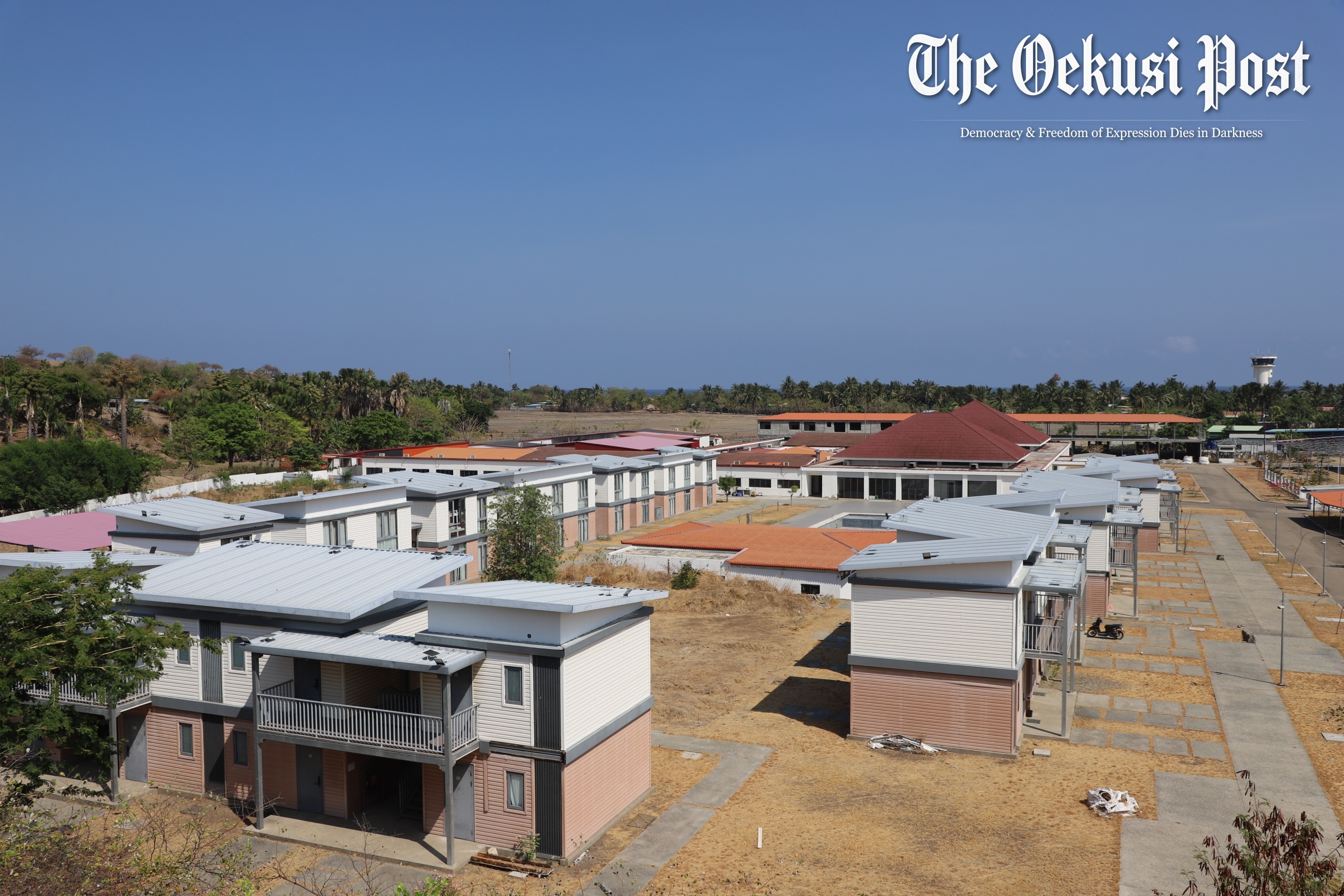
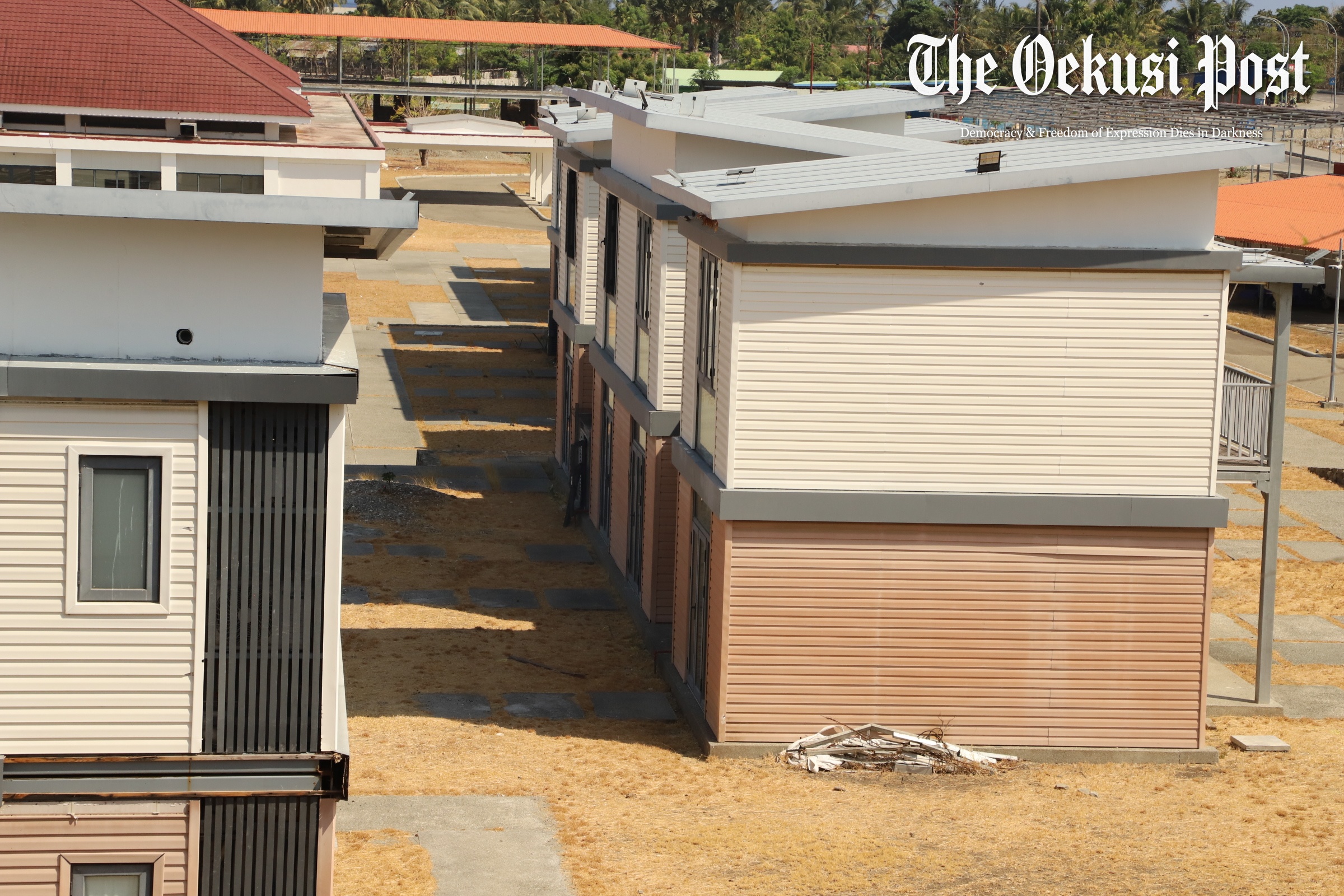
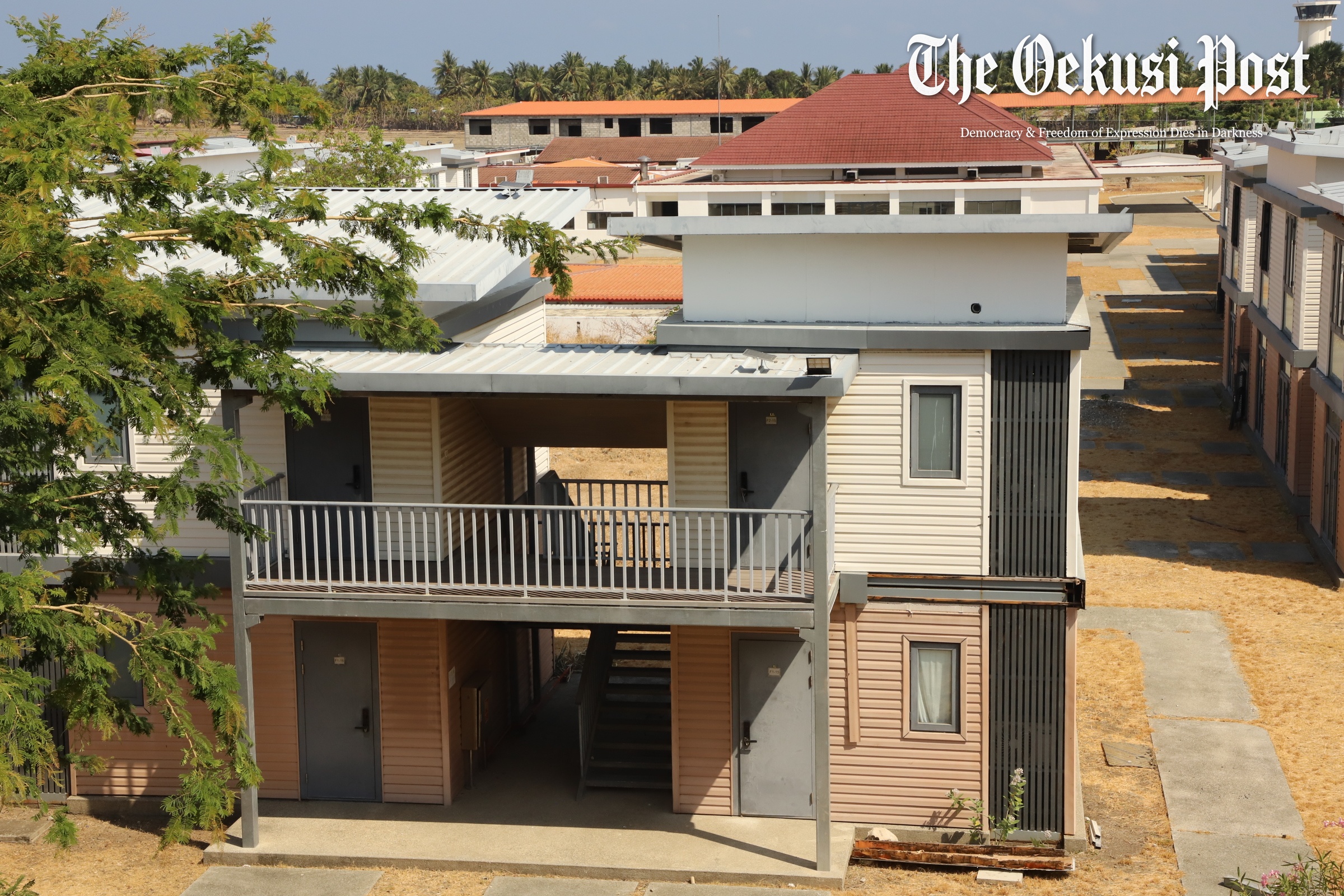
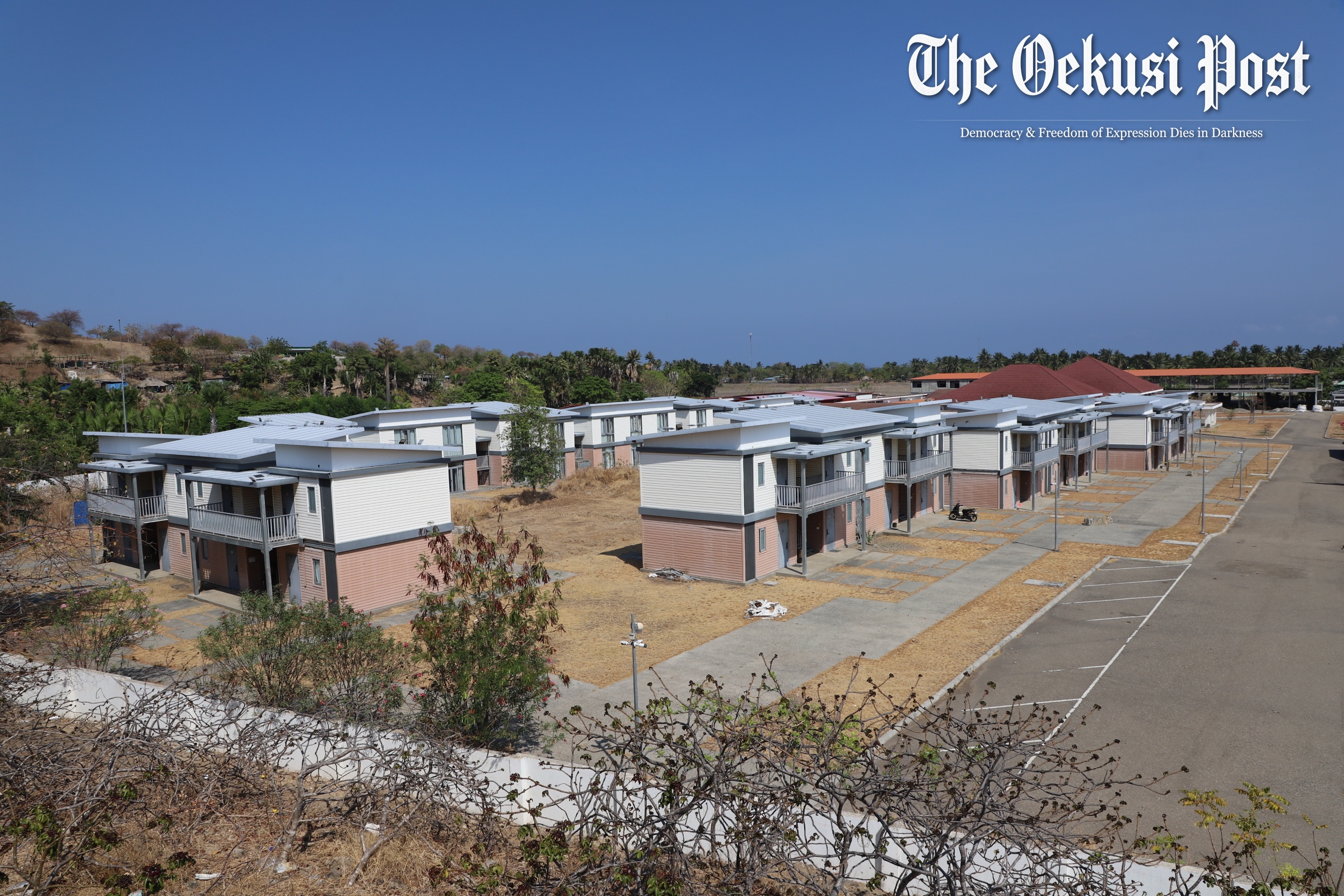
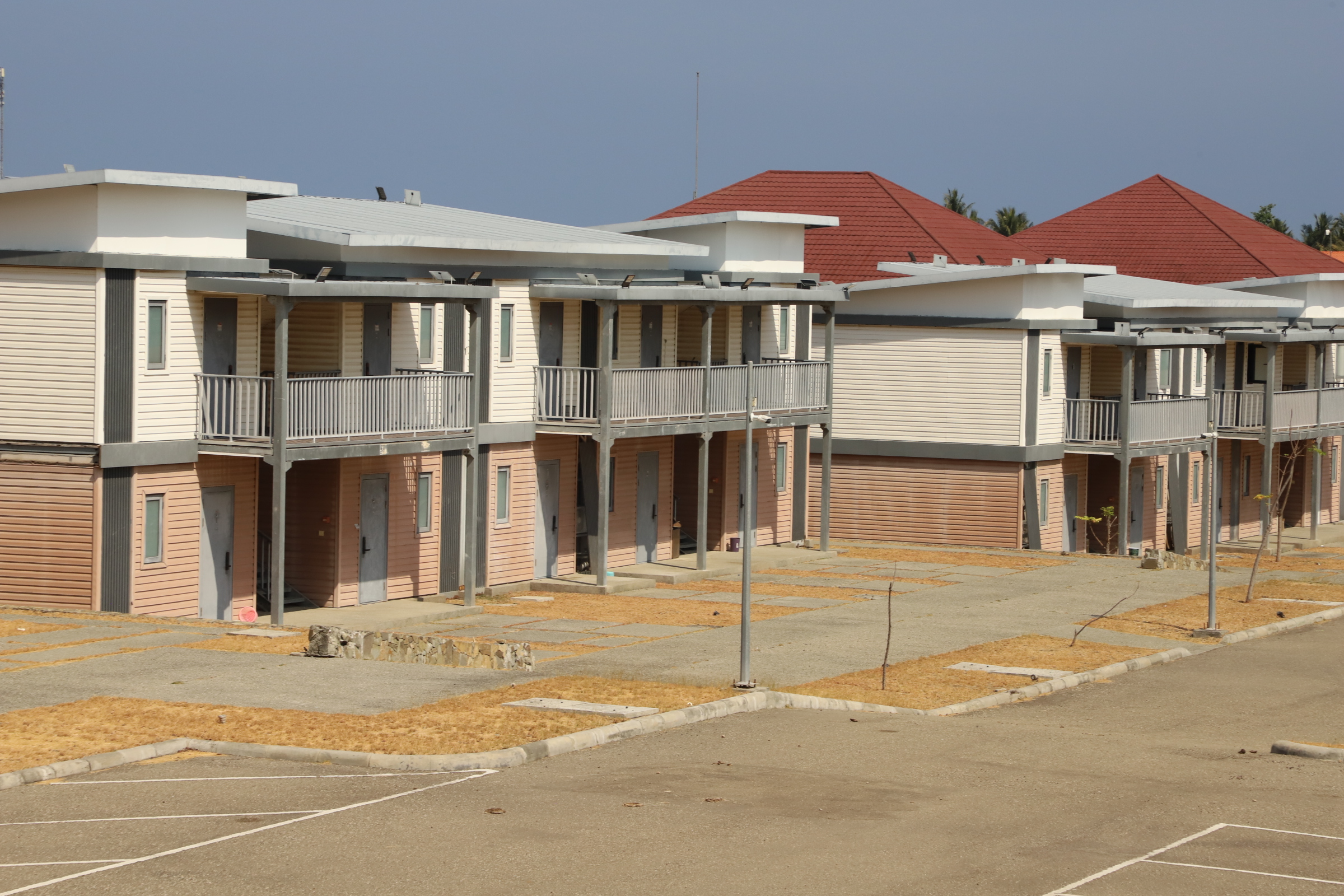
AMBENO (TOP) – At the end of 2015, most people in Oe-Cusse Ambeno were very happy because they would soon have a luxury hotel standing in their midst, in the Oeupu area of Sanane hamlet, Costa village, Pante Makassar, Oe-Cusse Ambeno. Now, 11 years later, the hotel on which USD 11.6 million of the people’s money was spent has turned into a “ghost” hotel.
During the tenure of Rogério Tiago de Fátima Lobato as president of the RAEOA Authority, there was a good intention to repair and develop the hotel so it could attract investment for the people of Ambeno, but it ended up being misused. Criminals from overseas used the hotel as a scam call center and an illegal online gambling operation. On 25 August, 2025, a joint operations team carried out an operation to shut down the scam call center, and just two days later, on 27 August, 2025, Prime Minister Kay Rala Xanana Gusmão decided to dismiss Lobato as president of the RAEOA Authority, along with all the members of its structure.
After a Council of Ministers meeting, Régio Romeia Servantes da Cruz Salu was appointed to replace Lobato and was sworn in by State Administration Minister Tomas do Rosario Cabral on 28 April, 2026.
This report will focus only on the construction of the hotel in 2015.
The hotel has had many names, such as Five Star Hotel, Macassar Beach Hotel and others. In the end, it was named Hotel Oeupu because the hotel physically sits in the Oeupu area of Sanane hamlet, Costa village, Pante Makassar, Oe-Cusse Ambeno. In this report, all of the names refer to the same building.
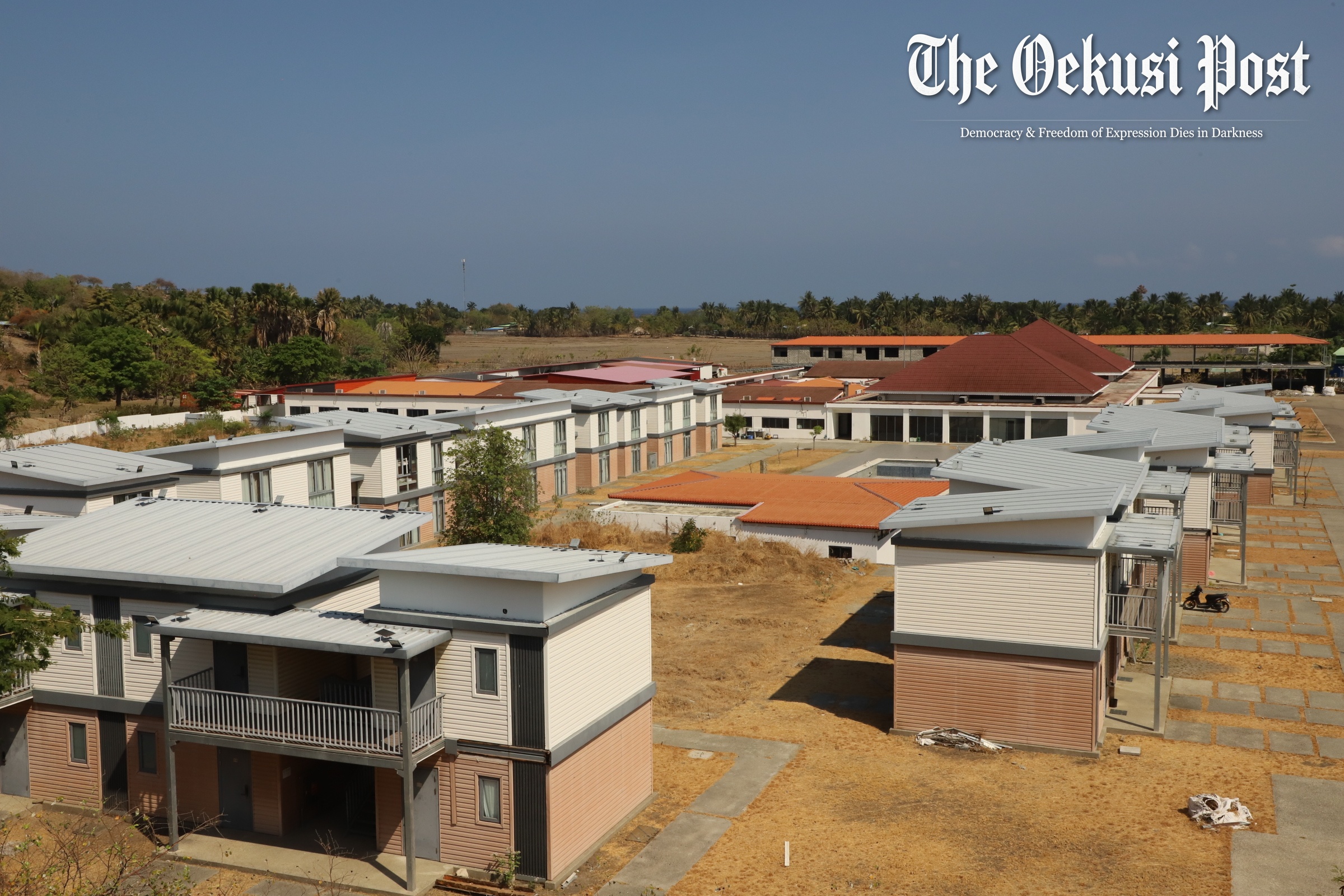
The hotel was supposed to be completed in May 2015, so it could be used for the ceremony in which Timor-Leste celebrated 500 years of Portuguese colonial presence in Lifau, Oe-Cusse Ambeno. The contract set a term of 304 days (10 months). But when the celebration date arrived in November 2015, many rooms were still not ready. RAEOA authorities had to choose Hotel Lifau to show respect to the guests.
The Pante Makassar hotel project continued from 2015 to 2019, generating eight contracts, 12 or more addenda, and payments to a number of companies. Between 2015 and 2018, RAEOA paid USD 11,647,650, and the Chamber of Accounts estimated the total cost of construction at USD 12,173,631.
Within the project, the supervision meant to ensure the work was done properly became the most expensive part. The initial supervision contract of USD 535,865 rose to USD 3,459,015, an increase of 545.5% over the initial value. The court described the amounts as “absurd.”
The documents in my hands are Audit Report No. 8/2022 (Process No. 03/2018/AUDIT-S/CC), which covers the financial audit of RAEOA for 2016 through 2018, and Audit Report No. 1/2018, Vol. II (Process No. 2/2016/AUDIT-S/CC), which includes RAEOA’s response submitted on 14 May, 2018, by Arsénio Paixão Bano (acting president of the RAEOA Authority) and Mari Bin Amude Alkatiri. The two documents tell a story that the auditor and the audited entity recount in different versions.
An order that came before RAEOA was born
The first question in this case is simple: Who started the work?
According to RAEOA’s response to the Chamber of Accounts, on 16 June, 2014, the National Government, through the prime minister at the time, gave the order to start work. The company that was awarded the job began work in July 2014. The law creating RAEOA is dated 18 June 2014, two days after the order. Mari Bin Amude Alkatiri, president of the RAEOA and ZEESM TL Authority and a former prime minister of the Democratic Republic of Timor-Leste, was appointed by Presidential Decree No. 22/2014 of 25 June, nine days after the order to start work.
The argument of Alkatiri, president of the RAEOA/ZEESM-TL Authority, is clear: The contracting of Timor Capital Partners Asia Lda. (TCPA) was done by the central government at a stage when RAEOA did not yet exist. RAEOA said it has no documents on the procurement process: “This document must be requested from MTC/ADN, which managed the process at the beginning.” According to RAEOA, notification to the awarded company to start work amounts to a declaration of intent by the contracting entity. When the company began work, it showed it had received that declaration. The contract was therefore complete, even though it was not in writing.
The audit took a different position. The court wants to attribute responsibility to the region, through its president, based on the fact that Alkatiri was appointed in February 2013 as Timor-Leste’s representative on the issue of the Special Zone of Social Market Economy for Oe-Cusse Ambeno.
RAEOA responded with Government Resolution No. 06/2013 of 13 February. RAEOA said the resolution gave a mandate to “start dialogue and debate with relevant entities in Portugal and the CPLP.” According to RAEOA, that mandate “clearly does not include any executive power.” RAEOA wrote that the TCPA contracting was “totally unrelated to RAEOA and to the person who at that time represented Timor-Leste” on the ZEESM issue.
RAEOA also said that the explanation for starting work before the contract was signed “can only be asked of the central government.” It said that when it began operating, it faced “a fait accompli”: The company had already been chosen, and there was no alternative but to enter into the corresponding contract.
According to Report 8/2022, the contract with TCPA was signed on 5 March, 2015, when Alkatiri had been president of the Authority for more than eight months.
Contract without tender
The contract had no public tender. The Chamber of Accounts wrote that the contract was a direct award, granted to TCPA alone.
The contract’s value was USD 10,008,593.44. That value came after ADN (National Development Agency) verified the prices the company presented. RAEOA’s response said ADN detected “significant divergences” and recommended a price reduction. TCPA’s initial proposed price was more than USD 12 million, which was cut to USD 10,008,593.44 after ADN’s analysis. According to RAEOA, the president approved this value.
The audit noted an “oddity” in the timing between the request for ADN’s price analysis and the actual formalization of the written contract. RAEOA responded with these explanations:
- When it received ADN’s revision of the BoQ in November 2015, all of RAEOA’s human resources had already been allocated to organizing the celebration of the 500th anniversary of the Portuguese arrival in Timor-Leste and the 40th anniversary of the proclamation of independence.
- The celebrations take place at the end of November and in December, when a significant portion of staff is traditionally on leave for the Christmas and New Year holidays.
- RAEOA replied to ADN on 12 January, 2016. After clarifications on 14 January, new negotiations began with the company, and the contract was signed in March.
According to RAEOA, it is “totally incomprehensible” to attribute to RAEOA and its political officials the idea that, when it was notified to start work, there was no price structure because the project was not finished.
A critical point in RAEOA’s response is supervision. At that time, ADN carried out no follow-up or supervision, even though work had begun and there were “significant shortcomings in the project that needed to be improved with the utmost urgency.” RAEOA therefore decided to request an urgent contracting process for an accredited and credible entity. The result was a contract with Tecproeng.
Timeless clock: delays and addendum
The work was supposed to be completed in May 2015, and it was not. The Chamber of Accounts recorded these addendums:
First Addendum (22 April, 2016). The addendum extended the deadline for completing the work from 1 January to 30 June, 2016. It was tripartite: The RAEOA Authority, TCPA and Tecproeng signed it. The addendum also imposed a penalty on the company. TCPA must pay the costs arising from the extension of the contract with Tecproeng, at an estimated value of USD 502,170. But the report states that the RAEOA-ZEESM-TL Authority “continues to pay Tecproeng but begins to deduct this cost from the payments that must be made to TCPA.”
Second Addendum (1 July 2016). The addendum extended the deadline to Nov. 30, 2016, and provided for a penalty on the contractor equal in value to the cost of Tecproeng’s supervision of the work.
The report found no evidence of further addenda. Even so, the company continued working until July 2017.
On 20 July, 2017, TCPA submitted a new extension request. RAEOA rejected it. RAEOA’s response explained the reasons:
- The region’s technical assessment indicated that the contractor should not receive an extension, since the average progress of the work was about 0.5% to 1% a month.
- The contractor lacked the financial capacity to guarantee the continuation of the services.
- RAEOA notified the company of its intention to terminate the contract if the delays remained unjustified and unresolved. The company “said nothing.”
- RAEOA invoked Clause 15.2 of the General Conditions, which provides for the possibility of termination when the contractor “without reasonable excuse fails to proceed with the Works.”
The contract was terminated, and on 10 September, 2017, RAEOA took administrative possession of the work. RAEOA’s response in May 2018 said it was continuing the work under a direct administration regime and expected the work to be completed in July of that year.
Regarding the penalty in the addendum, RAEOA said it “does not accept granting a free and unjustified extension of the deadline.” It considered that a free extension, with RAEOA continuing to bear the cost of supervision, would be a “double penalty” for the region, “because it cannot enjoy the work it contracted for and will bear the increased cost of extended supervision.” RAEOA said the penalty for contractors who fail to comply should set an example for other government entities
Progress Figures
According to Tecproeng’s monthly report:
- At the end of January 2016, the physical progress of the work for which TCPA was responsible was 39.72%.
- Over the 16 months from the end of January 2016 to the end of May 2017, progress was only 25.92%, or 1.62% a month.
The Chamber of Accounts wrote: “The progress of the work was too slow, and it showed that the company lacked the capacity to fulfill the contract.”
In 2016 and 2017, RAEOA paid TCPA a total of USD 5,472,892. The amount is net of the withholding of the performance guarantee (USD 644,548) and the penalty imposed on the company (USD 328,036).
The question about additional services
Another point in RAEOA’s response is technical reasons. According to RAEOA, hotel projects of a quality no lower than four stars require appropriate technical conditions. RAEOA pointed to shortcomings in the initial project:
- The need to enlarge the so-called back-of-house building to include more support space for the hotel;
- An air-conditioning system;
- The opening of restaurant space in the main building.
RAEOA said these weaknesses cause “devaluation and reduce the potential of the hotel unit,” and that the public interest calls for “quick intervention that makes the project viable.” It acknowledged that later intervention “always involves higher mobilization and construction costs, which will be lost to the public treasury.”
After meeting with the company, RAEOA asked TCPA to submit a budget for the necessary services. According to RAEOA, TCPA never submitted any project proposal or price, and the requested variation “never materialized.” RAEOA invoked the procedure: Any variation takes effect only after the contractor submits a proposal to amend the project, the BoQ and the price.
RAEOA also contested a statement in the preliminary report that “as of August 2016, the cost of these services is not known to the Authority,” which the report argued showed a lack of effective cost control. RAEOA called the statement “false and careless.”
Tecproeng: oversight up 545%
Of all the documents I have read, this chapter shows the most contradiction.
The unknown value
The earlier supervision contract with Tecproeng (12 August, 2015) was worth USD 535,865. In three years, the contracts and addenda totaled USD 3,459,015:
|
Contract / Addendum (amended) |
Date |
Value (USD) |
Paid (USD) |
|
Works supervision |
12/08/2015 |
535.865 |
535.865 |
|
Addendum 1 |
22/04/2016 |
508.170 |
502.476 |
|
Addendum 2 |
01/07/2016 |
416.180 |
405.608 |
|
Addendum 3 |
01/12/2016 |
586.160 |
584.244 |
|
Addendum 4 |
18/09/2017 |
272.620 |
258.989 |
|
Management, Coordination and Supervision (hotel and beach resort) |
01/11/2017 |
840.490 |
761.719 |
|
Addendum 1 |
19/07/2018 |
299.530 |
187.776 |
|
Total |
|
3.459.015 |
3.236.677 |
Between 2015 and 2018, RAEOA paid Tecproeng USD 3,236,677. As of 31 December, 2018, the December invoice of USD 45,736 and a retention of USD 66,410 remained unpaid.
The amount was 545.5% higher than originally foreseen.
The percentages the Court found “absurd”
The Chamber of Accounts compared supervision with the value of the work it covered:
• TCPA period (January 2016–May 2017, 16 months). TCPA did work worth USD 2,594,227 (an average of USD 162,139 a month). Tecproeng’s supervision over that period cost USD 1,286,787 (an average of USD 80,424 a month), or 49.6% of the value of the services TCPA carried out.
- New contract (1 November, 2017). After taking administrative possession, RAEOA signed a new contract with Tecproeng. The addendum extended it through December 2018, with a total value of USD 1,140,020 for 14 months (USD 81,430 a month). Tecproeng’s job was to supervise Ji Sheng Construction, MPD, PT Tropical System and Holiqun, whose contracts (including addenda) were worth USD 3,231,480. Supervision accounted for 35.3%.
- Total. Work done and to be done: USD 8,704,372. Supervision: USD 3,459,015, or 39.7%.
The court wrote: “These percentages clearly show that the amounts contracted and paid to Tecproeng are absurd.” The main reason, according to the court, besides unjustifiably high salaries, was that the contracts and addenda “never reflected the progress of the works.” The Tecproeng team “consisted of too many members” for a very long period, compared with the nature, complexity and timeline of the work.
The audit wrote that when it became clear TCPA could not meet the deadline, Tecproeng’s contract had to be amended to reduce the team, “but this was not done.” Also, from 2015 to 2018, there was no change in the salaries paid to Tecproeng team members, although the work lasted more than four years.
The court did acknowledge that Tecproeng was not responsible for the delays. Applying the penalty to TCPA was also proper. But the penalty totaled USD 328,036, or less than 10% of the total value of the contracts and addenda with Tecproeng. The monthly supervision cost was “truly too high” compared with the nature and amount of the work.
Compared with the Noefefan Bridge
Report 8/2022 quotes from Report 1/2018, which compares the supervision of the hotel with the supervision of the Noefefan Bridge, also in Oe-Cusse:
- The average monthly cost of hotel supervision: USD 107,173. For the Noefefan Bridge: USD 51,045. That is double.
- The average monthly cost of hotel supervision remuneration: USD 75,930. For the bridge: USD 24,069. That is three times higher.
- The difference arises mainly from the remuneration in the hotel supervision contract, “but there is no justification for these differences.”
- The coordinator (team leader) of the two Tecproeng supervision teams is the same person, who performs two functions at the same time. Even so, the team leader’s monthly remuneration ranges from a maximum of USD 17,550 (hotel supervision) to USD 7,500 (bridge supervision). The court wrote: “There is no reason why his salaries provided for in these contracts should be different.”
- The remuneration for technicians on the hotel supervision teams was, in general, more than double that of the bridge supervision technicians.
- The Tecproeng proposal, which formed the basis of the contract, provided for the “mobilization” of the entire supervision team for five months, “without regard to the physical progress of the work.”
RAEOA replies: compare wrong, lump-sum contract
RAEOA provided the following responses regarding supervision:
1. The comparison with the Noefefan Bridge is not valid. The bridge supervision contract was signed by the central government (MOPTC). RAEOA does not know the negotiations and other factors that led to the lower price. RAEOA said that comparing prices between processes of a different nature “does not follow the facts,” and that other examples might show RAEOA does work of better quality and at lower prices than those applied at the national level.
2. Special condition. RAEOA justified hiring the hotel inspection by the urgency of not letting the work proceed without on-site inspection, and because the inspection “receives” work that is already in progress and that it knew from the start would need revision and changes to the project. The inspection assumes responsibility for services performed before it came on board, with an execution project that “may have significant deficiencies.” RAEOA said this “has a significant effect on the increase in inspection prices” but is “not higher than other inspection prices.”
3. Lump-sum contract. The contracted value is the total sum for the delivery of services. The contracted entity is not required to present proof of expenditure or to prove compliance with the allocation of workers. That information is requested only in the proposal. In the execution phase, there is no need to verify the allocation of the experts’ time or to ask for proof of expenditure. Payment of the experts is therefore legitimate and does not depend on their presence at the work, nor does the lump-sum payment to the team leader or the payment of rent for the installation.
4. USD 5,694 was returned. An incorrect payment of USD 5,694 related to local transportation in December 2015 has been returned (doc. No. 31, attached by RAEOA).
RAEOA’s conclusion: “There is no illegal action by RAEOA,” “there is no damage to the public treasury,” and no reintegrative or sanctioning liability can arise, “because the terms of the contracts were irreproachably fulfilled.” There is no reason to jointly review the payments under the hotel and bridge supervision contracts.
Another point in RAEOA’s response concerns the preliminary report’s statements that 100% of the remuneration was paid to the team leader while he was allocated at the same time to another project, and that there was an illegal payment because of the lack of technicians’ presence at the work in some months. RAEOA’s response to these two points is the lump-sum argument above.
One person, two salaries
In Report 8/2022, the Chamber of Accounts did not accept the lump-sum argument in the team leader case.
The court wrote that in 2015 it found that the salary of Tecproeng team leader Fernando Rodrigues was paid twice (100%), under the hotel supervision contract and the Noefefan Bridge supervision contract. The court maintained that a person can coordinate multiple supervision teams at the same time, “but he cannot accumulate salaries.” The problem was billing 100% of his time to one project while, at the same time, supervising another project, for which he also billed 100%.
The court explained the logic: The monthly salary of USD 17,550 refers to the full-time function (100%) at the hotel, and USD 7,500 to the coordination of bridge supervision. If in a given month the same person devotes part of his time to another project, he must reduce the allocation factor. For example, if the coordinator splits his September time half to the hotel and half to the bridge, he should bill 50% to each contract.
The data:
- Between February 2016 and March 2017 (14 months), Tecproeng continued to invoice the hotel and bridge coordinator's full salary. Two contracts were paid: USD 147,500 for the hotel and USD 75,000 for the bridge.
- In seven of the 14 months, a doubling of salary was observed (February to May, July and August 2016, and January 2017). Taking the higher salary (hotel), USD 47,500 was overpaid.
- That amount is close to the USD 45,000 that RAEOA deducted in the accounts settlement, but an excess payment of USD 2,500 remains.
- In March 2017, a duplicate payment of the coordinator’s salary was found in the bridge contract. Under the contract, the monthly salary is USD 7,500, but that month the invoice was USD 15,000, paid in April. The result was an irregular payment of USD 7,500, which caused financial damage to RAEOA and was not considered in the agreement on implementing the recommendations.
A note on one point: The supporting document for January 2016 (which Tecproeng issued and RAEOA paid) was not sent to the court. The court therefore could not reach a conclusion on the payment of the bridge supervision coordinator’s salary for that month.
The office that didn’t exist
Another item that the court found illegal was “office rent.”
According to Report 8/2022, in 2015 Tecproeng submitted a monthly statement from its representative certifying that it spent USD 3,000 (hotel) and USD 2,500 (bridge), for a total of USD 5,500 a month. But the company did not present expense receipts.
The BoQ of the bridge construction contract provides that the work yard must have facilities and equipment for the company responsible for supervision, including offices and dormitories, worth USD 563,632, which RAEOA must pay for during the work. The court deemed the amount “very high,” enough to accommodate Tecproeng’s office.
From 2016 to 2018, Tecproeng continued to invoice each month, across two contracts, amounts for office rent, without supporting receipts. The payments totaled USD 102,955: USD 68,855 for the hotel and USD 34,100 for the bridge.
The court concluded:
• "No evidence was found that Tecproeng leased any office in Oe-Cusse between 2015 and 2018."
• "Everything shows that, during that period, Tecproeng's office operated in the Noefefan bridge construction workshop, which RAEOA paid under a contract.
Undocumented payment of expenses “causes damage to the public treasury” and constitutes an illegal and improper payment because it violates Article 14, No. 1, of the LOGF.
Accounts settlement: USD 124,118 returned, but not complete
In Report 1/2018, the Court recommended (recommendation No. 25) that RAEOA review all payments to Tecproeng in 2015 to 2017, especially the coordinator’s salary and undocumented reimbursable expenses.
On 13 February 2019, RAEOA responded that it had entered into an accounting agreement with Tecproeng:
|
Description |
Value (USD) |
|
Retainer agreement |
12.690 |
|
Warranty Retention |
66.410 |
|
December Invoice |
45.736 |
|
Subtotal (for Tecproeng direct) |
124.836 |
|
Technicians in August |
27.468 |
|
August Coordinator |
10.050 |
|
Rent |
15.000 |
|
Subtotal reintegration of CdC |
52.518 |
|
Position Fernando Tono at Hotel |
45.000 |
|
Noefefan rent |
26.600 |
|
OPS revised subtotal |
71.600 |
|
Total reviews |
124.118 |
|
Bond balance |
718 |
This agreement allows RAEOA to recover USD 124,118. But the Court said not recovering all the value paid was improper:
- The agreement does not reduce the amounts for office rent billed from January 2016 under the hotel supervision contract.
- The court does not know how RAEOA arrived at USD 45,000 because it did not present a justifying calculation.
- Regarding the USD 26,600 deducted for bridge rent, it is not known whether that refers to 2015 or later years. The court said it was possible that it referred to the rent RAEOA paid during 2016, which totaled exactly the same amount.
- Rents paid from January to March 2017 (USD 7,500) are not considered in the agreement.
- The rents invoiced by Tecproeng under the hotel supervision contract, which totaled USD 68,855, were also not considered.
Therefore, the Court wrote that RAEOA only partially accepted recommendation No. 25.
The final results are in Table 16 of the 8/2022 Report:
|
Description of illegal and inaccurate payments to Tecproeng |
Value (USD) |
|
Duplicate salary of hotel and bridge coordinator (not considered in accounts agreement) |
2.500 |
|
Duplicate salary of Noefefan Bridge coordinator, March 2017 |
7.500 |
|
Undocumented office rent expense |
102.955 |
|
Subtotal Tecproeng |
112.955 |
Who signed
Report 8/2022 shows the norm that was violated and those who authorized payment. The norm violated in the hotel case is Article 14, No. 1, of the LOGF. Sanctioning liability applies under items (b) and (d) of No. 1 of Article 50 of the LOCC (minimum fine: one-half of net monthly salary; maximum: one-half of net annual salary). Reintegrative liability applies under Nos. 1 and 4 of Article 44 of the LOCC.
|
Payment |
Value (USD) |
Authorized by |
|
Duplicate coordinator salary (hotel and bridge) |
2.500 |
Marí Bim Amude Alkatiri (Presiding Authority); Leónia da Costa Monteiro (Regional Secretary of Finance) |
|
Duplicate bridge coordinator salary, March 2017 |
7.500 |
Marí Bim Amude Alkatiri; Leônia da Costa Monteiro |
|
Undocumented office rent |
102.955 |
Alkatiri (USD 84,955); Arsênio Paixão Bano, Acting President of the Authority (USD 18,000); Leónia da Costa Monteiro, jointly and severally liable for the total value of USD 102,955 |
Customs: duties not collected
Another part of the report deals with import customs duties (section 2.7.4).
In the previous audit, the Chamber of Accounts found that Interway (linked to the clinic) and TCPA did not pay customs duties owed on the import of components, materials and equipment for the construction of the clinic and the hotel in Oe-Cusse. The court recommended (recommendation No. 4) that RAEOA “carry out the settlement and collection of the amount of customs duties.”
Report 8/2022 concluded that the recommendation was not accepted. RAEOA did not collect customs duties but “prepared a request to the Ministry of Finance to grant an exemption from paying these taxes to the two companies.” The court wrote that the requests were “without legal basis and based on arguments that do not deserve to be entertained.”
By how much?
RAEOA's response to Report 1/2018 cited the following amounts:
- The audit attributes to RAEOA a failure to pay customs duties on goods imported by TCPA in the amount of, “at least,” USD 246,796.
- The furniture supplied by TCPA, with a contract value of USD 376,763.82, which the Authority has already paid for, was not subject to customs clearance or payment of the corresponding customs duties. RAEOA said it “cannot deny” the audit team’s comments.
RAEOA Defense
RAEOA responded with the following arguments:
- Different treatment for commercial investment. The president of the Authority understands that the clinic and the hotel must be treated differently because the investment is clearly commercial in character and tied to the ZEESM project. By analogy with the treatment of private investors, RAEOA/ZEESM should not be burdened with higher customs duties.
- The price does not include tax. In Interway’s proposal and in the contract, the price does not include customs duty. When there is a contradiction between the General Clause and the Special Clause, the latter prevails. If customs duty is paid, the amount must always be added to the contracted price.
- Useless action. This procedure would be redundant because RAEOA would indirectly pay a tax that it receives back as its own revenue. RAEOA invoked Article 19 of Decree-Law No. 32/2008 (Administrative Procedure) and the principle of utility.
- No harm to the state. These exemptions have been practiced in the central government by recent governments in the area of state investment.
- Imports are handled by the Dili Customs Service. That entity is responsible for settlement, verification of payment and customs clearance. RAEOA has no dependency or hierarchical relationship with Dili Customs, and the documentation must be requested from that service. The import operation cited in the preliminary report relates to 2016, not 2014 or 2015 (the years the audit covered).
- The “Interior Design” contract. RAEOA said it has no documents on the process of importing these goods and cannot know whether they were cleared in Oe-Cusse or in Dili. Because of the long lapse of time, the relocation of customs service facilities and turnover of personnel, it is not possible to find any documents.
- TCPA cannot respond. Because of the termination of the construction contract, RAEOA has no relationship with TCPA that would allow it to obtain a response from the company itself.
- Customs context. Before RAEOA/ZEESM, there was no clear customs structure or border surveillance, which allowed many goods to enter the parallel economy. After efforts to expand the customs team, there was an “unprecedented increase” in state revenue. It therefore “does not seem credible” that these goods could enter Oe-Cusse without customs clearance.
The court concluded in Report 8/2022 that these arguments did not merit acceptance.
Furniture: USD 594,610 paid, but the goods incomplete
On 15 September 2015, RAEOA and TCPA signed a contract for the supply and installation of hotel furniture and materials worth USD 1,486,524. The contract was concluded by direct award. RAEOA justified it with Article 92, No. 1, item (e) of the RJA, to ensure that interior design materials would be in the same line as, and consistent with, the materials already in the work.
RAEOA explained that the rooms purchased under the construction contract already include furniture. What the construction contract does not provide for is decoration of the hotel’s common areas (reception, waiting room, restaurant and other shared-use zones). RAEOA said ADN and the central government should have been careful to include these items in the initial project.
The advance of USD 594,609.74 arose from a TCPA request at a meeting because the furniture supplier did not want to accept the order without part payment.
But RAEOA recognized:
- When the goods arrived in Oe-Cusse, “it was observed that a significant portion of the ordered goods was missing.”
- The items that arrived did not match the value paid.
- The company said other movable items were being manufactured and would be supplied later.
- Because TCPA lacked the financial capacity to overcome liquidity constraints, no further deliveries or other payments were made. There was no opportunity to settle accounts.
- The contract was terminated for non-performance.
RAEOA wrote: "RAEOA is currently in a new verification process for all materials provided and is weighing the relevance and utility of filing judicial proceedings for the enforcement of the company's contractual responsibility, to defend the public interest."
Hotel Lifau: Plan B for 500th anniversary celebration
RAEOA’s response tells another story: the unfinished hotel.
RAEOA said that, despite efforts to ensure Hotel Ambeno would be finished in time for the celebration of the 500th anniversary of the Portuguese arrival in Timor-Leste and the 40th anniversary of the proclamation of independence, as the date of the event approached it saw that finishing on time “will be absolutely impossible.” RAEOA found itself in “absolute contingency” and needed to find an alternative solution.
After consulting the prime minister, who agreed with the solution and gave the signal to move forward, RAEOA decided to buy furniture to furnish and adapt, with dignity, another lodging unit, Hotel Lifau. The “Supply housing equipment” contract, worth USD 48,125, was made with a local company through an urgent procurement procedure on Nov. 15, 2015. RAEOA invoked Article 94, No. 1, item (a) of the RJA. RAEOA wrote that until almost the last moment, it did everything and put maximum pressure on the contractor to have, at least, rooms ready to live in, “but did not succeed.”
The paid-for hotel: final table
|
Company
|
Object |
Contract value (USD) |
Paid until 2018 (USD) |
|
TCPA |
Hotel construction (05/03/2015) |
10.008.593 |
5.472.892 |
|
TCPA |
Hotel furniture and equipment (15/09/2015) |
1.486.524 |
594.610 |
|
TCPA Subtotal |
|
11.495.118 |
6.067.502 |
|
Tecproeng Subtotal |
Supervision |
3.459.015 |
3.236.677 |
|
Ji Sheng Construction Subtotal |
Civil works (01/12/2017, with addenda 4 and 5) |
2.030.346 |
1.623.117 |
|
MPD Subtotal |
Electricity, fire and gas, CCTV, sound (13/12/2017) |
976.538 |
550.811 |
|
PT. Tropikal Sistem Subtotal |
Pool (11/01/2018) |
59.596 |
20.000 |
|
Subtotal Holiqun |
Air conditioning and ventilation (10/01/2018) |
165.000 |
|
|
Other expenses |
TCPA employee pay |
- |
10.244 |
|
AMOUNT |
|
|
11.647.650 |
Payments by year: 2015: USD1,864,041; 2016: USD5,440,294; 2017: USD1,269,313; 2018: USD3,074,002.
The initial cost of the hotel was USDUSD 10,544,458 (the TCPA contract of USD10,008,593 plus supervision of USD535,865). Through the end of 2018, RAEOA paid USD11,647,650, and USD963,426 remains to be paid for the performance and quality guarantee. The Chamber of Accounts estimated the total cost of construction at USD12,173,631, which included the cost of works and equipment supply of USD8,704,372, an amount lower than the initial contract with TCPA.
The court acknowledged this: “Despite many difficulties and delays, the cost of the works remains below what was previously foreseen.” But on supervision, the situation is the opposite.
Details on companies in the recovery phase:
- Ji Sheng Construction: Addendum 1 (2 February, 2018) changed the performance guarantee from a bank guarantee to a 10% withholding on payments; addenda 2 and 3 (19 July and 13 November, 2018) extended the deadline to Oct. 31 and Dec. 31; addendum 4 (25 March, 2019) extended it to 30 June, 2019, with additional work of USD28,980; addendum 5 (21 June, 2019) included additional work of USD2,510. Payments through the end of 2018, net of withholding, were USD180,346.
- MPD: The initial deadline was 13 September, 2018; an addendum dated 5 July, 2018, extended it to December 14, 2018. Retention: USD56,645.
- PT Tropical System (USD59,595.68): One-month term; extended to 30 June, 2019, by an addendum on 29 March, 2019.
- Holiqun (USD165,000): Retention: USD15,478.
Other cases in the same table
On pages 197-198 of Report 8/2022, the table of situation, violated norm and responsible parties also lists other cases that are not part of the hotel. For context:
- Interway (Multipurpose Special Clinic): Advance payment of USD 133,875 without a corresponding bank guarantee (Nos. 1 and 3 of Article 9, Government Decree No. 1/2016). Authorized by Alkatiri and Leónia da Costa Monteiro.
- Interway: Illegal and improper payment of USD 7,800 related to meal costs for international technicians who were not on duty, from May to December 2016.
- Profico (new administrative building): USD 17,321 (remuneration and cost allowance for days without actual service), authorized by Alkatiri (USD 13,582) and Arsénio Paixão Bano (USD 3,740), with Leónia da Costa Monteiro jointly liable for the total.
- Profico: USD 6,756 for unjustified airfare.
The hotel today
On Monday, 16 November, 2026, The Oekusi Post (TOP) visited the hotel and found that about three foreign citizens from the People’s Republic of China are still occupying it.
Earlier, on Thursday, 7 November, 2024, the Supreme Court of Justice (STJ) held the trial of 12 defendants in the case involving projects in the Special Zone of Social Market Economy (ZEESM) in the Special Administrative Region of Oe-Cusse Ambeno (RAEOA).
The 12 defendants are Mari Bin Amude Alkatiri, former president of RAEOA, and 11 defendants who were formerly managers at ZEESM.
In the courtroom, the Public Prosecution, represented by Deputy Prosecutor General Pascasio da Roza Alves, gave his observation that the factual grounds are tied to the Chamber of Accounts’ audit of projects in ZEESM, some of whose payments were illegal.
“As the prosecutor sees it, some payments for projects in ZEESM are illegal, and therefore the court is asked to weigh all the facts before making a decision,” Pascasio said in the Supreme Court of Justice courtroom.
He explained that the Public Prosecution also considers that the facts in its accusation prove that, in the five-star hotel project in RAEOA, RAEOA authorities awarded contracts to people but not on a legal basis. The Public Prosecution therefore considers the defendants’ conduct to have caused damage to the State of Timor-Leste.
For that reason, the Public Prosecution, through Pascasio, asked the Supreme Court of Justice to impose sanctioning measures on the defendants and have them return the money.
The defense of defendant MA, private lawyer Soraya Marques, told the Supreme Court of Justice there was insufficient evidence, no damage to the State and no financial wrongdoing.
“The prosecutors failed to prove it, and there is no fact that they consider evidence,” she said.
Likewise, the defense of defendant FSM, public defender Fernando de Carvalho, said the matter the Public Prosecution raised in its allegations against his client FSM has no basis.
“As for the facts imputed to my client, at ADN he has a technical service role, collecting documents such as debt certificates and bank guarantees. His work relates only to those things, and there is no responsibility that attaches to the accusation the Public Prosecution has submitted,” he said.
He added that his client’s work is only to look at documents and does not involve inspections in the field or involvement in the contract.
After hearing all parties, the Supreme Court of Justice, through Judge Maria Natercia Gusmao Pereira, decided to reconvene on 6 December, 2024, at 9 a.m. to make a decision on the case.
The trial was presided over by single judge Maria Natercia Gusmao Pereira. The State was represented by two prosecutors, Alfeu Moreirra and Pascasio da Roza Alves, and the 12 defendants were represented by a public defender and some private lawyers.
Meanwhile, Deolindo dos Santos, president of the Court of Appeal, declined at the time to comment on the matter.
“I cannot talk about the audit itself because, when a trial is underway, there is an appeal, and as president of the Court of Appeal, I will take part in deciding that appeal.”
Deolindo explained that the audit report on ZEESM has already been approved twice, that some parts comply with those conventions and some do not, and that there is something that needs to be examined. He said one cannot look only at the audit but must also look into how the state accounts appear, adding that it is necessary to find out.
He said it appears the 2023 state accounts have been approved and sent to the National Parliament.
“Parliament has already made an assessment. This is not just one or two things but many things, including ZEESM. It assessed the execution of the budget during fiscal year 2023,” he concluded.
Alkatiri and Bano named formal suspects in Upmetan water project
The Public Prosecution has also registered Mari Bin Amude Alkatiri as an arguido (formal suspect) in a case related to the water project (production and bottling of drinking water) in Oe-Cusse and Ataúro, under NUC 0036/25.
There are three formal suspects in the criminal accusation: Mari Bin Amude Alkatiri (former prime minister and former president of the RAEOA Authority); Arsénio Paixão Bano (former president of the RAEOA Authority from 2018 to 2023); and Dhalia Guterres Bernardo (former employee of Scope Asia Timor Lda.).
The case focuses on an authorization of 22 April 2016, in which Alkatiri (then president of the RAEOA-ZEESM Authority) authorized a debit of USD 13,513 from the RAEOA-ZEESM TL bank account at BNU Timor-Leste to pay Scope Asia AG for an insurance policy for the drinking water production and bottling project. The payment was made in full (100%), but the project has been abandoned from 2016 to this day. It is located in the Upmetan area, Kutete village, Pante Makassar, Oe-Cusse Ambeno.
According to information obtained by The Oekusi Post (TOP), Alkatiri, a former president of the RAEOA/ZEESM-TL Authority, has been given the status of suspect/arguido by the Public Prosecution in connection with the management of the people’s money during his tenure at RAEOA-ZEESM TL.
These cases include:
- Crime of harmful administration. Investigation into financial management and administration during his leadership of RAEOA.
- Haksolok ship acquisition case. The purchase and construction of the ship Haksolok, at a large value (about USD 30 million), became controversial and was long delayed.
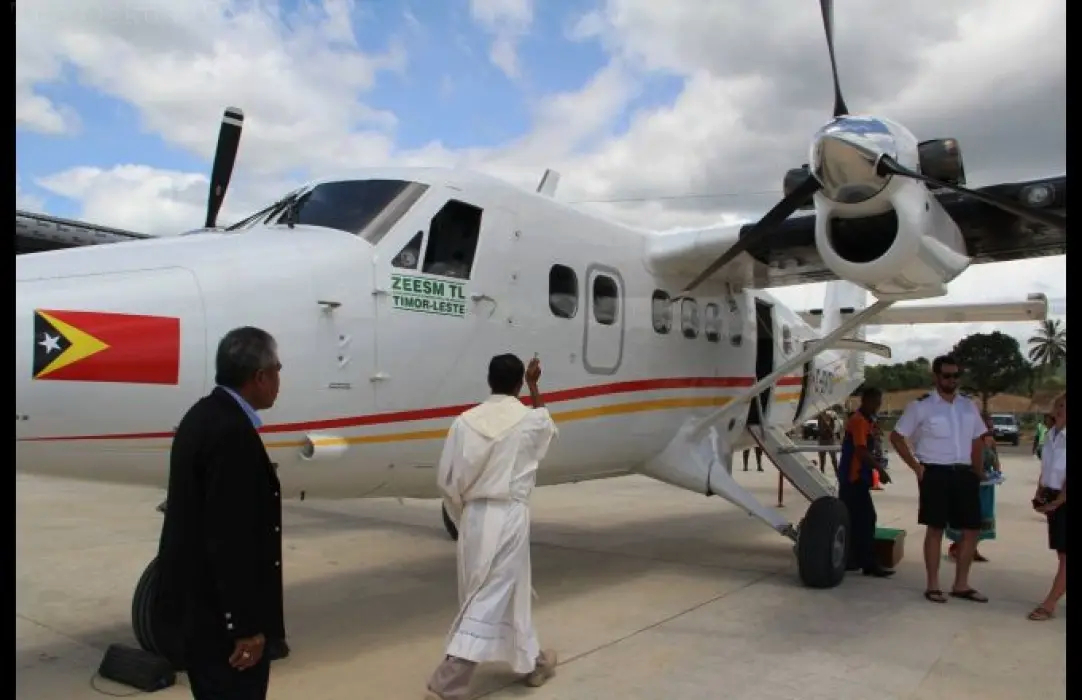
- Twin Otter aircraft acquisition. Questioned by the Chamber of Accounts regarding the purchase of an aircraft for about USD ß7.2 million through direct award.
- Drinking water project and consulting. Other cases mentioned in the investigation process include the water project (drinking water) and contracts with consulting companies.
- Abuse of power and tax fraud. Other accusations related to the use of power and the management of state resources during the period.