


DILI (TOP) - The People's Republic of China is currently looking for ways to import oil and liquefied natural gas from the United States of America (USA), as Beijing efforts to increase the diversification of energy supply in the turbulence of the energy market caused by the de facto closure of the Strait of Hormuz by Iran.
According to a report that The Oe-Kusi Post (TOP) accessed from the Nikkei Asia report in the edition of Tuesday, March 31, 2026 that, nearly 600,000 barrels per day of US crude oil will be loaded on ships bound for China in April, informed by various European research companies, Kpler and which will go to the largest oil terminal in the United States, in the city of Corpus Christi in Texas.
About 300,000 metric tons of US LNG bound for China will be loaded in March.
Those resources could still be diverted to Japan or South Korea. But if unloaded in China, they would mark the first shipment of U.S. crude oil to the country since February 2025 and LNG since December 2024, around the time President Donald Trump reassumes office.
In a report published on Wednesday, Kpler said China wants to secure more sourcing options, suggesting that the potential return on U.S. products indicates that energy security policy has shifted to favor diversification over Beijing’s diplomatic stance.
China, the world’s largest importer of crude oil, reportedly relies on imports for about 70% of domestic consumption. With crude oil prices soaring due to the war in the Middle East, U.S. energy—which Beijing is subject to additional taxes as a countermeasure against Trump’s tariffs—could be back on the table.
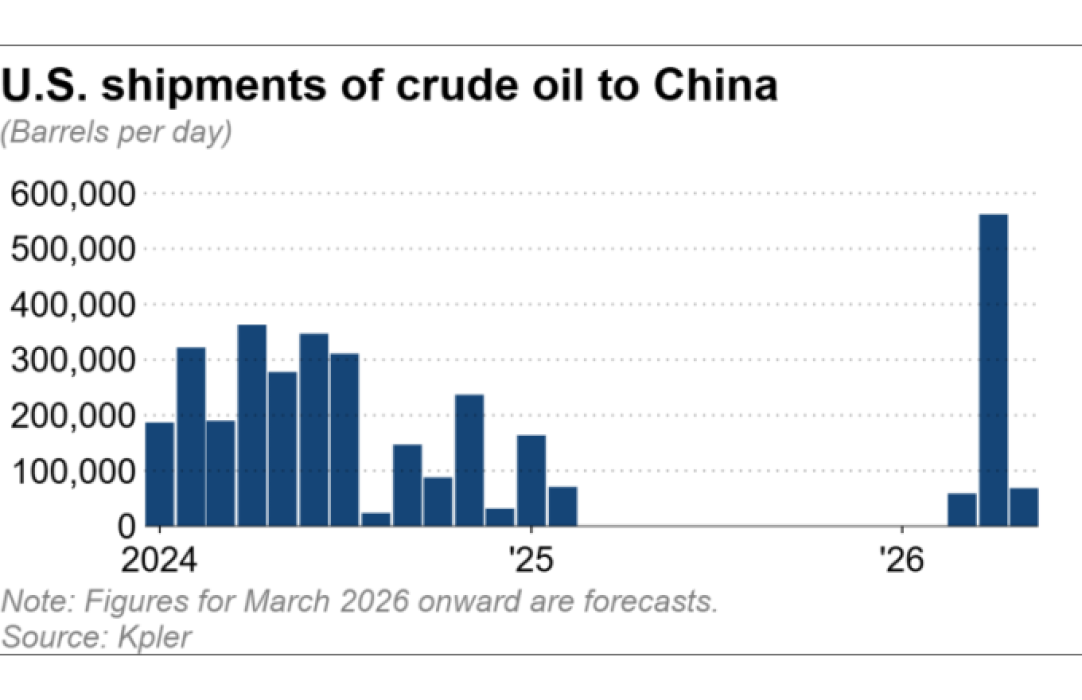
China stopped buying U.S. oil and LNG in response to Trump’s tariff policies. Trump has demanded larger energy purchases from the United States, along with agricultural products and aircraft. The matter is likely to be discussed at the US-China summit scheduled for May in Beijing.
U.S. procurement demands may be easy for China to absorb, given rising supply concerns. Beijing may want to use energy imports in the negotiations, hoping for tariff reductions and easing tensions.
China’s crude oil imports total $325.1 billion in 2024, data from China’s customs administration, with the U.S. providing 1.8%, or about $6 billion.
The Trump administration in 2025 imposes a 20% tariff on China that includes so-called reciprocal tariffs and those intended to stem the flow of fentanyl. Both were found unconstitutional by the U.S. Supreme Court in February and invalidated.
As an alternative, the US imposed a 10% tariff under Section 122 of the Trade Act, but its duration was limited to 150 days.Thereafter, the duties are expected to transition to the new tariffs under Section 301 of the Trade Act. China would prefer to keep the current rate of 10%.
Although China’s energy self-sufficiency rate is high at approximately 80%, the domestic spread of artificial intelligence and electric vehicles has led to an increase in electricity demand. China’s electricity generation in 2023 totals 9.55 million gigawatt-hours, the International Energy Agency reports, the largest globally and more than double the second-place United States.
In response to rising oil costs, China raised domestic selling prices for gasoline and diesel fuel from 24 March.
To prevent a spike in gasoline prices and the resulting dissatisfaction, Beijing also introduced measures for the first time to temporarily curb price increases.
The Middle East accounts for nearly half of the crude oil by value imported from China via tankers. The supply disruption will hurt the Chinese economy which is already struggling due to a lack of domestic demand.
Zhao Dong, vice chairman of state-owned China Petroleum & Chemical, said in an earnings call on March 23 that the company is securing Saudi Arabia’s crude through a route that avoids the Strait of Hormuz. He also said, his company is operating coal-fired chemical plants at full capacity.
To diversify energy sources, China is expanding cooperation with Central Asian countries and Russia, with which it has friendly relations.
"We must expand the scale of cooperation in the natural gas sector," Chinese President Xi Jinping told Turkmen People's Council President Gurbanguly Berdimuhamedov during a meeting in Beijing on March 18.
Turkmenistan, which sends gas to China by pipeline, is its fourth largest gas supplier by value.
Russia is China’s largest supplier of oil and gas. President Vladimir Putin is expected to visit China in early May to discuss energy cooperation with Xi, including the construction of the Power of Siberia 2 pipeline from Russia to China.
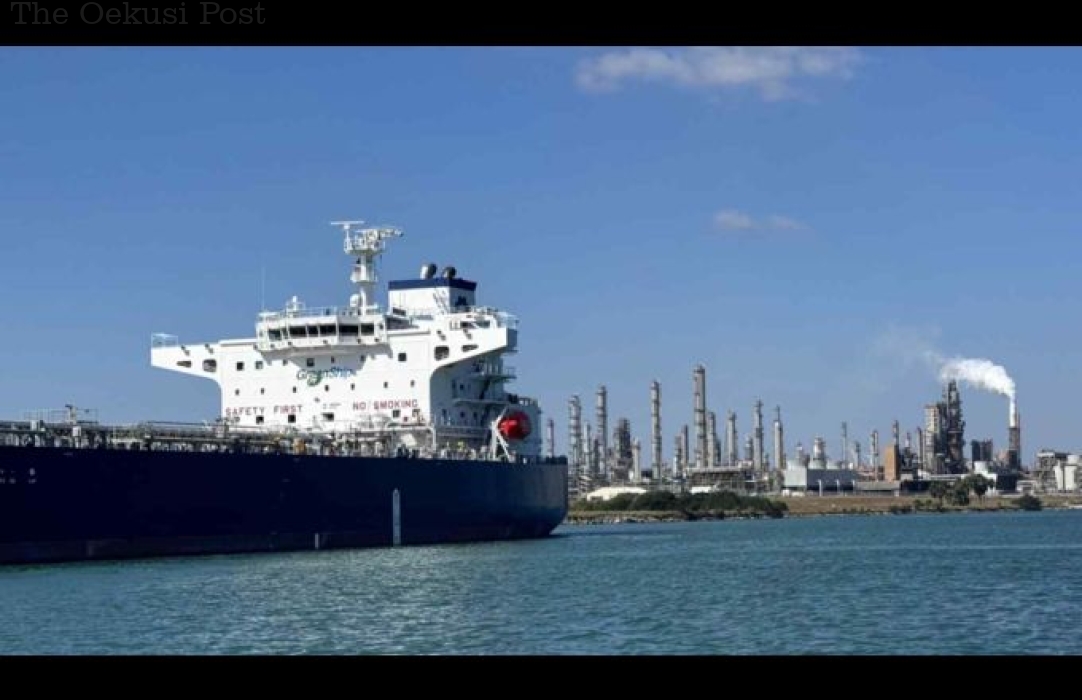
Tankers bound for China prepare to load 600,000 barrels of U.S. oil per day, research firm says
Earlier on Wednesday, March 25, 2026, the government of Timor-Leste through the meeting of the Council of Ministers approved a draft Decree-Law that establishes temporary measures to stabilize fuel prices and ensure the security of their supply in Timor-Leste.
The Draft Decree Law was presented by the Minister of Petroleum and Mineral Resources, Francisco da Costa Monteiro at the Council of Ministers meeting on Wednesday, March 25, 2026.
According to a press release from the Council of Ministers meeting, the diploma aims to reduce the impact of the current international instability in the energy sector, protect the purchasing power of families, reduce the impact of price increases that may occur in the economy and ensure the regular functioning of economic activities, while ensuring the availability of fuel in the country.
The diploma defines the maximum limit for the price sold to consumers, fixing the value of US$ 1.50 per liter for gasoline, US$ 1.65 per liter for diesel, aviation fuel (avtur) US$ 2.50 per liter, and liquefied petroleum gas (LPG) at US$ 4.2 per kilogram.
“To ensure these limits, importers in the future must present the actual import costs, which serve as the basis for calculating the subsidy that the State will provide, which is financed through the General State Budget,” the content of the decision of the Council of Ministers.
The Decree-Law also provides for measures to ensure continuity of supply, including the definition of import strategies for essential fuels, in coordination between public entities and operators of the sector, as well as the possibility of adopting exceptional mechanisms for market regulation.
Regarding supervision, strengthen the action of the competent authorities, with special attention to prevent the diversion of subsidized fuels from leaving the national territory and apply sanctions in case of non-compliance.
The measures are temporary and remain in force until the end of the year, and may be revised, extended or terminated depending on the evolution of the international market.