


A new UNESCO report warns that impunity for the killing of journalists is rising worldwide. In Timor-Leste, which leads ASEAN on press freedom, the risk to journalists comes from elsewhere: low pay, insecure contracts and dependence on government money.
AMBENO (TOP) - When we think of threats to journalists, we often think of bullets, bombs and drones. In Timor-Leste, however, the threat journalists face every day comes from something else: pay that is not enough to live on.
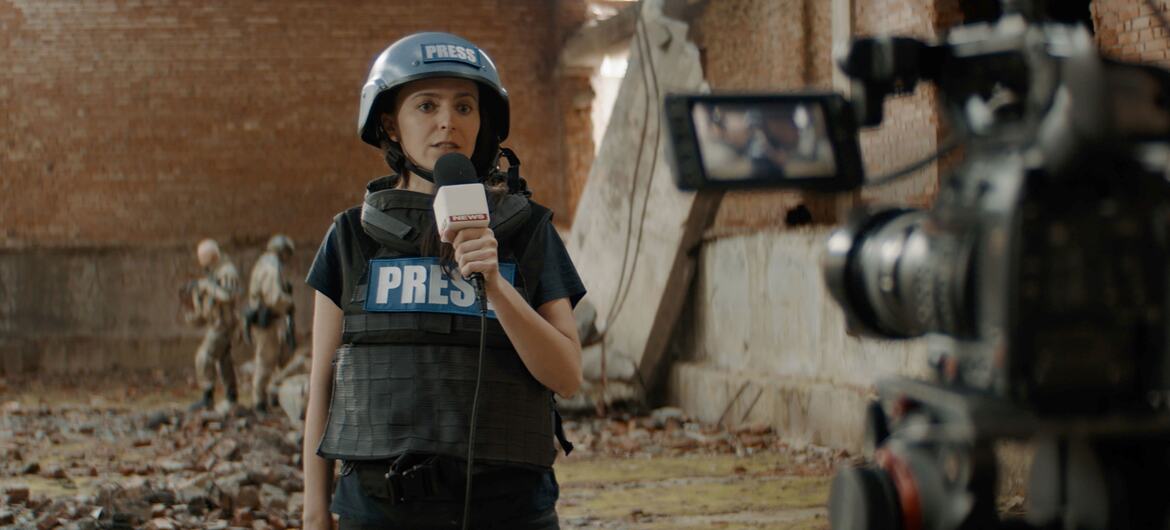
This point is especially relevant given a new UNESCO report that The Oekusi Post (TOP) accessed today. The report shows that the global impunity rate for the killing of journalists reached 86 per cent in 2024-2025, rising for the first time in more than a decade. A total of 189 journalists and media workers were killed in this period, 127 of them in conflict zones.
True, Timor-Leste is not a war zone. In April, Reporters Without Borders (RSF) reported that the country had climbed from 39th to 30th place in the 2026 World Press Freedom Index, ranking first in ASEAN. But this ranking does not reflect the living conditions of journalists in the newsroom.
The economy is the weak point
RSF’s own data shows this weakness. In 2026, Timor-Leste ranked only 38th on the economic indicator, with a score of 57.35. On the legal and social indicators, the country ranked 21st, and on security, 25th. In 2025, it ranked 53rd on the economic indicator, with a score of 50.61.
This means that despite a good overall position, the economy remains the weakest area for the media. RSF has warned that many media outlets depend heavily on government advertising because they lack diversified sources of income, which makes them highly vulnerable to political and economic pressure.
The problem is not new. In 2020, the International Federation of Journalists (IFJ) noted that the Southeast Asia Media Freedom Report 2019 showed that the main safety threat to journalists in Timor-Leste is low pay and poor, minimal working conditions.
TOP’s observation: professional work, manual-labour pay
The Oekusi Post (TOP), as a journalist who has so far had no monthly salary (an unpaid journalist), observes that journalists in Timor-Leste work every day in front of a computer and speak with everyone, from small street vendors to members of parliament, government members and the President of the Republic at the Presidential Palace.
But their pay is truly pitiful. Most of it is extremely low, on a par with workers who hold shovels and sift sand with sieves in the Comoro river. Journalists in Timor-Leste fall into the category of professional work, yet their pay is treated as lower than that of manual labourers (Trabalhador Manual). Most journalists in Timor-Leste continue to earn US$115 to $150 a month.
Pay treated this way, TOP says, negatively affects a journalist’s independence when trying to carry out in-depth reporting and write deep or investigative stories.
Low pay, short contracts
According to an article published by Stiftung Asienhaus, reporter Adroaldo De Almeida, who now lives in Australia, said that pay is the biggest problem for journalists in Timor-Leste, especially in the private sector. He said government-run media pay about US$300 to $500 a month, but in private media, salaries are extremely low and unstable. Some journalists earn only US$150 a month, and some as little as US$80 to $100.
Contracts are often valid for only one year and depend on whether the outlet can secure new funding, usually from the government or NGOs through project proposals. “If funding stops, journalists are often asked to keep working as volunteers,” De Almeida said.
Some outlets also use quota-based contracts. De Almeida explained that a journalist might receive, for example, US$250 a month, but the pay depends on meeting a quota of 20 stories. If the quota is not met, according to the article, they are sometimes paid just US$10 per story.
In 2020, the IFJ said that journalists in Timor-Leste earned an average of US$150 a month even before the Covid-19 pandemic, which was not enough to live on decently and to support the households of those who have started families. When some media owners wanted to cut salaries during the pandemic, the Timor-Leste Press Union (TLPU) asked them to reconsider.
Dependence on government money
The State of the Media: Timor-Leste 2024 report, by The Asia Foundation and ABC International Development, said that economic sustainability is the biggest challenge for the media, with many small operations relying on volunteer labour. Many outlets, including community radio, depend to some extent on government funding and subsidies. The report identified this as the main reason for low pay in the sector and suggested it makes it hard to protect the rights of media workers. Because the media lack economic security, staff turnover is high.
Matthew Abud, one of the report’s authors, told Asienhaus that the state is the centre of Timor-Leste’s economy and that government money is important to almost all media. Outlets that do not receive it, he said, are almost entirely volunteer-run. He also said that one broadcaster mentioned paying young staff very little until they leave, and that this has become part of the business model.
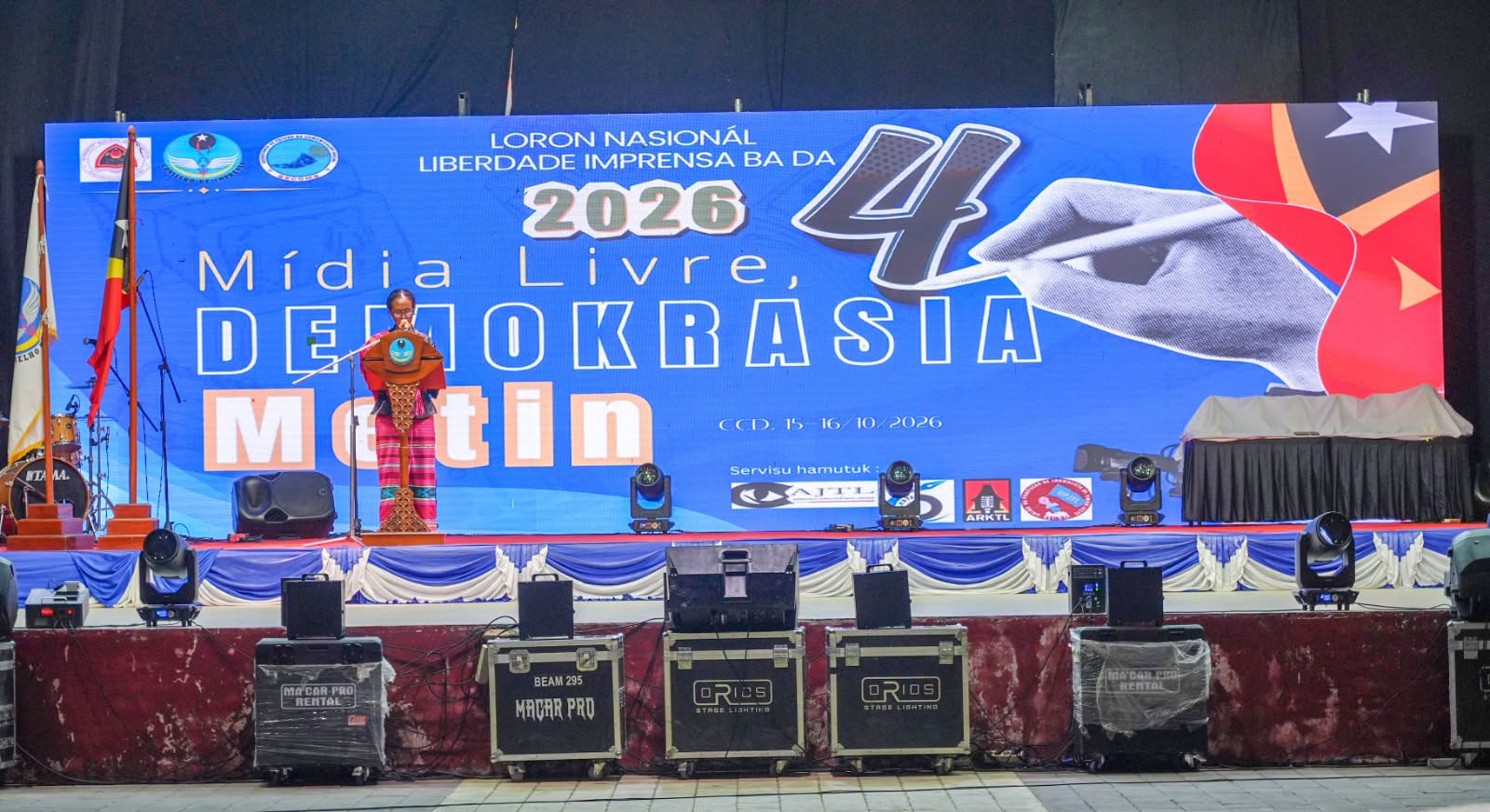
Alberico Junior, Director of Media Analysis and Monitoring at the Press Council, said that the government, through the Secretary of State for Social Communication, provides subsidies to media outlets, but in return they are expected to publish government programmes.
For Abud, this dependence also affects independence. He said there is pressure on, and caution among, media when covering scandals or crimes involving those in power.
Journalist David Da Costa, from a private outlet in Dili, said that many media outlets depend on government advertising and that the biggest difficulty is low pay, which makes journalism an unstable profession.
Online media also face no easy solution. Abud explained that even popular online outlets struggle to earn revenue on digital platforms because many of the companies are not registered in Timor-Leste and the country’s banking system is not well integrated internationally, which makes it hard to receive payments, for example from YouTube advertising.
Government acknowledges the problem
On 12 May, at the closing of the Dili Dialogue Forum organised by the Press Council, Deputy Prime Minister and Coordinating Minister for Social Affairs Mariano Assanami Sabino acknowledged that journalists face challenges including low pay and difficult working conditions. He also asked the Press Council to strengthen coordination with media organisations and to expand training for journalists.
Linking safety and independence
The UNESCO report provides data on physical risks to journalists in war zones. But in a small country like Timor-Leste, threats to journalists’ independence can also come from economic conditions: when journalists cannot live on their pay, depend on subsidies, or fear losing government advertising, they may choose not to investigate or not to write sensitive stories.
UNESCO itself says that progress is possible when governments invest in protecting journalists. In Timor-Leste, that investment also means fair working conditions.
Abud has suggested reforms, including independent public funding, while acknowledging that state money will remain important. He also said that training for young journalists will not have a lasting impact unless the financial basis changes. Alberico Junior of the Press Council said that if the media in Timor-Leste are to progress, the government must stop politicising public media and respect the work of the media.
For press freedom advocates, this shows that a good position in an international index does not mean journalists are in a sustainable economic situation. The test for Timor-Leste is how to build independent newsrooms, with fairly paid journalists, in Dili and also in areas such as Oe-Cusse Ambeno.