



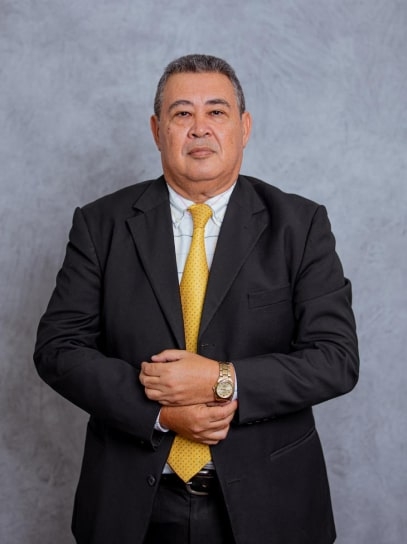
Opinion · By José Augusto Fernandes Teixeira, partner Da Silva Teixeira & Associados, Lda, Lawyers, Dili, Timor-Leste
On Thursday 15 October, Timor-Leste closed every school in the country for three days. The government told families to keep children indoors and urged anyone going outside to wear a mask. People in Dili said they could not see the sun. The cause was not a fire on our own soil. It was smoke from fires burning hundreds of kilometres away in Kalimantan, Sumatra and South Papua.
It is tempting to treat the haze like a typhoon: unfortunate, seasonal and nobody’s fault. A sharp new analysis by Mark Mangan and Marcus Ho, international arbitration lawyers at the Singapore firm Lindsay Francis & Mangan, argues that this view is wrong. Their Insight, published on 26 October 2026, describes the haze as man-made, enabled by government and driven by companies. They also set out the legal tools that could be used to hold those responsible to account. Timor-Leste’s leaders, lawyers and citizens should read it closely. The analysis below is theirs; the application to Timor-Leste is mine.
A crisis that law allowed
The numbers Mangan and Ho cite are hard to absorb. More than 1.2 million fire hotspots were recorded in Indonesia between January and late October. Close to two million hectares of forest and peatland burned, an area roughly the size of Wales. A record-breaking El Niño made things worse. Singapore had 19 consecutive days of unhealthy air.
The authors’ central point is that much of this burning is legal, or close to it. Indonesia’s Law No. 32 of 2009 prohibits clearing land by fire. But a “local wisdom” exception lets each family burn up to two hectares. Across a rural population of around 116 million people, that is a very large licence to burn. Companies are not entitled to use the exception. According to the reports the authors cite, however, local families have been used to start fires that then spread onto plantation land. About half of the area burned this year lies inside licensed concessions. Prosecutions have often ended in acquittals or light sentences.
President Prabowo has himself called the two-hectare rule “complete nonsense”. A presidential instruction issued in September narrowed the exception and banned it on peatland. The exception itself, however, remains law.
The legal routes, and what they mean for us
Mangan and Ho examine several bodies of law. Each has a Timorese dimension.
Human rights. The authors note that courts in Europe, India and South Africa have held states responsible for failing to control pollution from private industry. In those cases, economic benefit was no excuse for harming people’s health. Indonesia’s own Constitution guarantees a healthy environment. Our Constitution does too: it gives everyone the right to a humane, healthy and ecologically balanced environment. Every Timorese child kept home from school this month is evidence of what is at stake.
Customary international law. The International Court of Justice has repeatedly held that states must use due diligence to stop activities in their territory from causing significant environmental harm to their neighbours. That duty covers regulating companies. In its 2025 advisory opinion on climate change, the Court added that due diligence requires vigilant enforcement as well as rules on paper. The authors argue that keeping a burning loophole and enforcing the ban weakly could breach this duty. They are candid about the catch. No state can be taken to an international court without its consent.
The ASEAN Haze Agreement. Timor-Leste deposited its instrument of accession in November 2025, shortly after joining ASEAN. We now have a seat at the table, but the agreement has no enforcement mechanism. As the authors explain, disputes under it are resolved only through consultation and negotiation. Membership gives us a voice. It does not give us a remedy.
Singapore’s model. Singapore’s Transboundary Haze Pollution Act 2014 reaches conduct outside Singapore. It presumes that haze came from land identified by satellite and wind data, and it lets people harmed in Singapore sue. Singapore’s environment agency has just served notices on 20 companies under the Act. The authors also record the Act’s weakness. Jakarta’s refusal to share concession maps makes it hard to identify who owns burning land. Timor-Leste should study this model seriously, without assuming it would be easy to enforce.
Investment treaties. Mangan and Ho see the most potential in this route, because a treaty contains a state’s advance consent to arbitration. A foreign investor whose plantation, factory or resort in Indonesia has been damaged by fire or haze could bring claims for breach of fair and equitable treatment and full protection and security. Tribunals have treated both standards as requiring due diligence. The authors stress two limits. The wording of each treaty matters, and losses suffered outside Indonesia are not covered.
Timor-Leste has a timely reason to pay attention. On the same day our schools closed, our Deputy Prime Minister was in Jakarta signing a bilateral investment treaty with Indonesia. When it takes effect, it will protect Timorese investors in Indonesia. It will also protect the roughly 120 Indonesian private companies already operating here, so its obligations will apply to us as well. Before we ratify, we should understand exactly what the treaty says about environmental harm and the duty to protect investments.
Putting our own house in order
There is an uncomfortable point here, and it should be stated. Mangan and Ho stress that the haze is a regional problem: Thailand, Myanmar, Laos and India all burn very large areas every year. Timor-Leste burns too. FAO studies suggest that most Timorese farmers practise slash-and-burn shifting cultivation, usually on family plots of under two hectares. That is almost exactly the scale Indonesia’s “local wisdom” exception permits. FAO’s preliminary analysis found that fire affected a large share of our territory in 2017.
Subsistence farming in the hills of Bobonaro is not comparable to corporate clearing of peatland in Kalimantan. But if we invoke due diligence against our neighbour, we must be ready to show it ourselves. The most credible voice in ASEAN will belong to the country that demands better from others and invests in alternatives at home.
What Timor-Leste should do
Mangan and Ho close with three reforms: repeal the “local wisdom” exception, enforce the ban on clearing land by fire, and ban all open burning in extreme dry seasons, as Australian states do through total fire bans. Timor-Leste should support all three openly within ASEAN. I would add four steps for ourselves:
- Use our new ASEAN seat.Join Malaysia’s call for urgent regional talks and press for the Haze Agreement to gain real accountability mechanisms.
- Examine haze legislation.Assess whether a Timorese law along Singapore’s lines would be workable, and what evidence and cooperation it would require.
- Read the investment treaty with the haze in mind.Get expert advice on its environmental and protection clauses before ratification.
- Lead at home.Fund practical alternatives to burning for our farmers, and consider declaring fire bans in extreme dry seasons.
As the authors observe, more than a million hotspots in one country in one year is clear evidence that the current system is failing. Politics has so far failed to put out these fires. For Timor-Leste, a small state with little bargaining power, the law may be the most effective tool we have.
The legal analysis in this article draws on “What legal options are available under domestic and international law in response to the toxic haze spreading across Southeast Asia?”, an Insight by Mark Mangan and Marcus Ho, with Gillian Lee and Abhishek Srivastava, of Lindsay Francis & Mangan, published 26 October 2026. The views on Timor-Leste are the author’s own.


